
Josh Fortenbery: Alaskan, Existential, Neurotic Music for the Heart
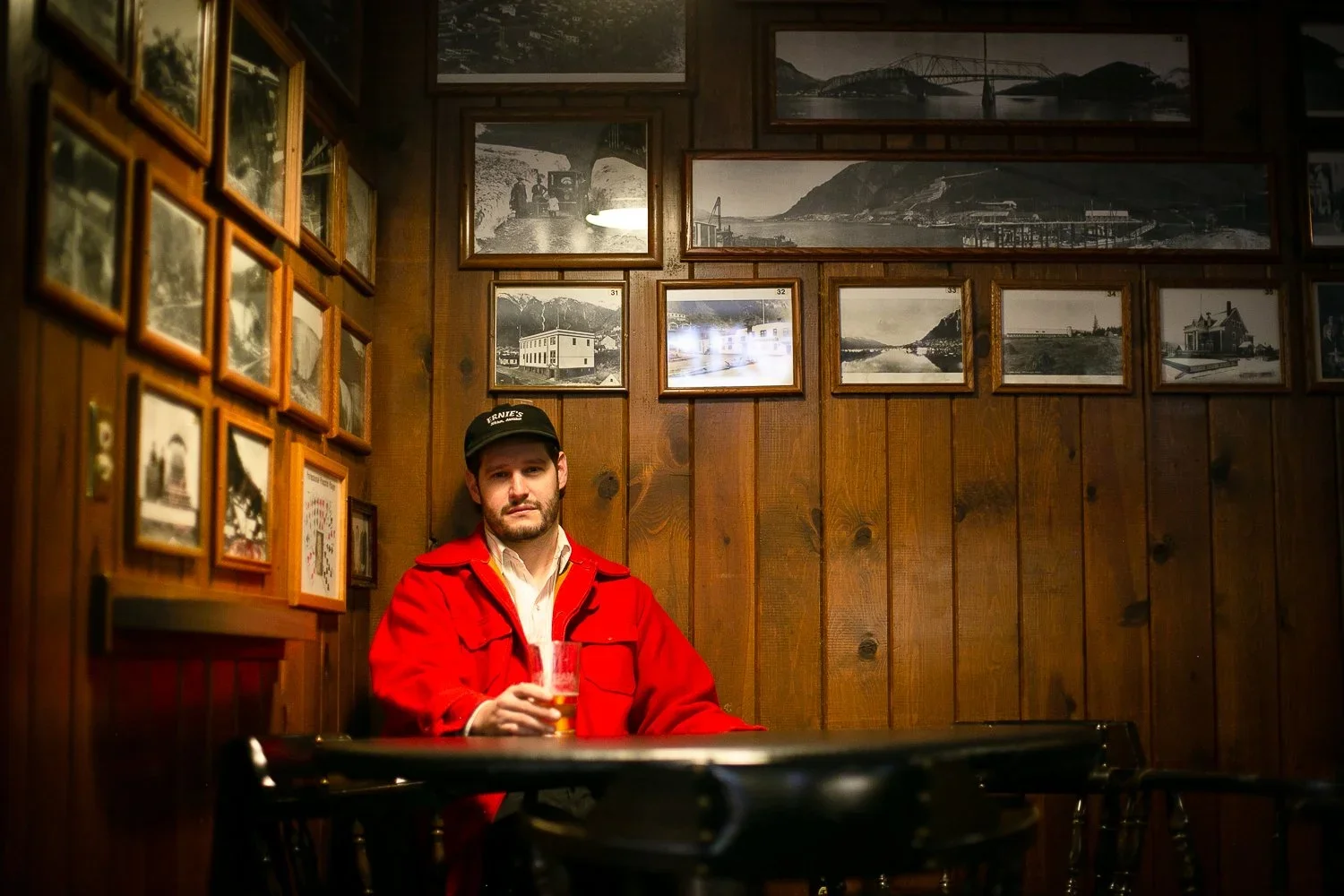
Photo by: Annie Bartholomew
Written by: Meredith A. Lawrence
Alaska-based singer/songwriter Josh Fortenbery got his start in music making up acapella songs for his stuffed animals. Later, he became a persistent Elvis impersonator who demanded visitors to his childhood home sit through his rendition of “Blue Suede Shoes.”
But as an adult, those cringy childhood memories behind him, Fortenbery plays what he aptly dubs existential country and neurotic folk music. It’s this blend of therapy confessional and boozy barroom observations, backed by Fortenbery’s lithe guitar playing that make him a standout from Juneau’s close-knit musical community.
“I feel like folk and country are both big umbrellas, they don't really describe what I do. But if I add these modifiers, I feel like people at least have the right expectation when they show up, that I'm not going to be singing about dirt roads, and I'm not going to be singing sweet folk songs,” Fortenbery says. “I've been trying to at least alert people that I have some things to say. I'm going to tell you some things, whether you want me to or not. And I'd say they loosely fit within the country and folk world in the same way that John Prine or Kris Kristofferson loosely fit in country folk, even though they didn't have a traditional country voice.”
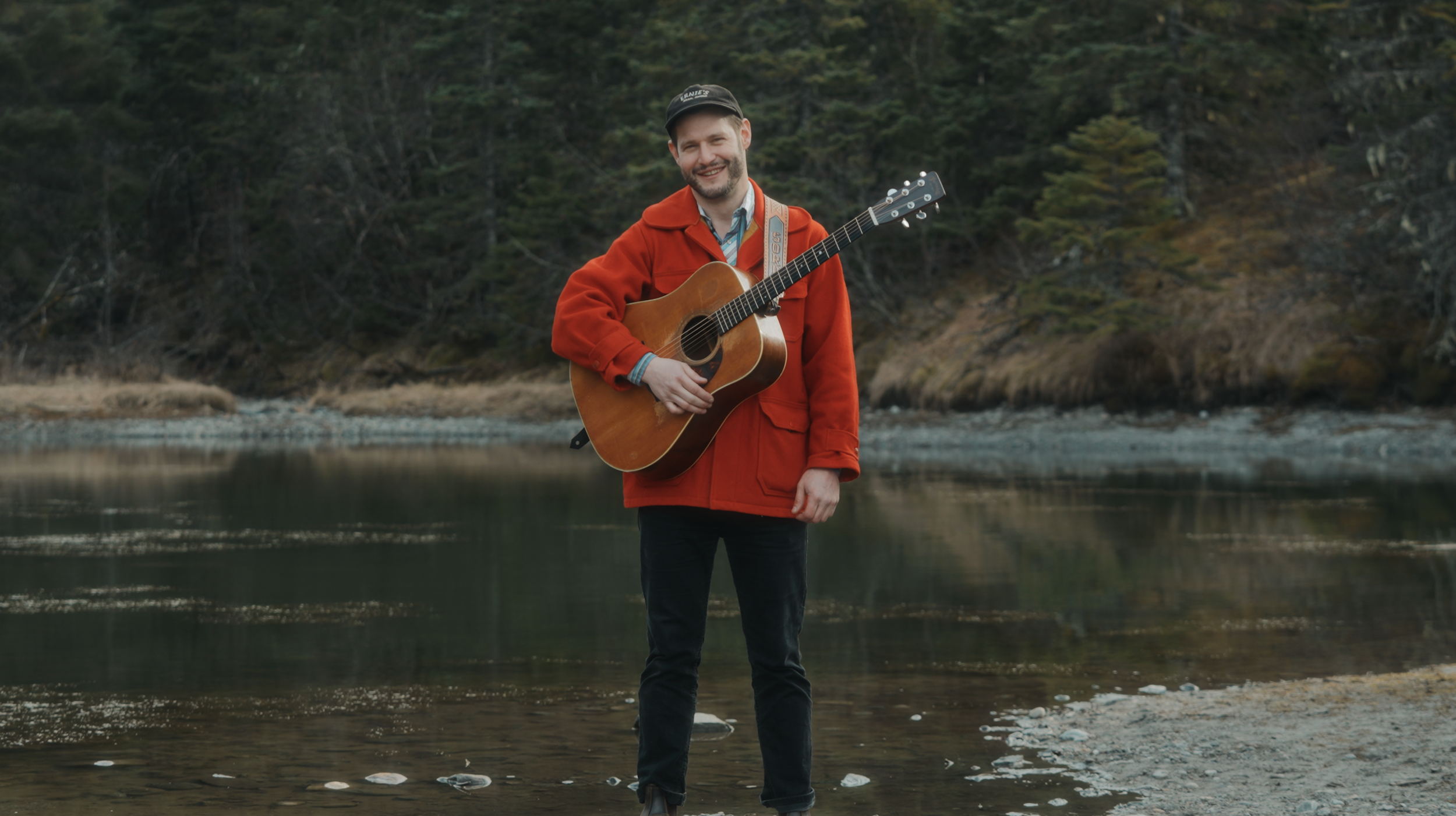
Photo by: Mike Vanata | Western AF
“I’m no crooner,” Fortenbery continues. Though technically true, in his husky, resonant voice, Fortenbery delivers keen observations about the world and the perplexing and devastating experience of being human, not unlike Kristofferson. Indeed, where others display names or catch phrases, Fortenbery emblazoned ‘sorry’ on his guitar strap, as if to offer some small apology for the weighty life vignettes his sets convey. “I’ve got this temper / It was my grandfather’s, then my father’s, now it’s mine / And it sits ‘tween the joy and the silence / This little spark of violence caused a century of crying,” Fortenbery sings on “Heirlooms,” a desolate, boiling track about prickly family lineages off his first album, 2024’s No Such Thing As Forever.
But the full weight of Fortenbery’s songwriting lives in his knack for seeing the thought through to its bitter end. On “Heirlooms” he continues: “And it’s easier to blame everyone who gave me my name / than admit I could change if I wanted / We all learn from our kin how to love and how to sin / and become the same men we once run from.” Embracing dualities, he works through many familial foibles (“Siblings,” “Nepotism,” “Sewing the Same Seam”) while also creating marvelous, endearing character portraits on “Honey,” and “Pappy’s Waltz” (off 2025’s Tidy Memorial).
“The joy of a live show and dancers is part of what addicts you to traveling around and playing music,” Fortenbery says. “People [understand] that both can exist at the same time: a lot of sad songs are danceable. Or if you can be willing to suspend your dancing shoes for a few tunes and listen to some folk songs, you can get things that might make you feel bad and good at the same time.”
After he gave up living room showmanship, Fortenbery discovered The Beatles and Paul McCartney (he wanted to play bass) and old blues players like Muddy Waters and B.B. King. Though he eventually realized he couldn’t claim blues music for himself — “I wanted to be a blues guitar player, not really understanding that maybe I didn't have the background or soul to pull that off without being an impersonator,” he says — its emotional influence is readily audible in Fortenbery’s lyrical guitar picking.
Fortenbery began playing and writing in earnest in high school (though then, like so many millennial teens, his taste favored punk and pop punk’s angst). For a time, he thought he might just continue making music with his high school band, but as priorities shifted to college and next life steps, the band met its natural end.
Alaska, the United States’ largest state, is rich not just in land mass, wild beauty, and natural resources, but in folk musicians as well. And in Juneau, which Fortenbery made his home 10 years ago, he discovered a supremely talented, generously supportive folk music community, whose encouragement gave him the confidence to play his own music solo regularly for the first time.
“I've always been writing, and I had all these songs, and I finally found a community that was willing to listen,” he says.
“I’ve always been writing, and I had all these songs, and I finally found a community that was willing to listen.”
At the mainstay open mic night at Alaskan Hotel (a former gold rush era brothel), Fortenbery met and joined forces with a local banjo player, Jeremy Kane. Together they graduated from playing afternoon shows for cruise ship visitors to packed evening shows. These days, Fortenbery plays solo, in both a barroom bluegrass band (Taking Care of Bluegrass) and a cosmic country band (the Getting Strangers), and on shared bills with the Muskeg songwriting collective.
The sounds from those varied projects, and endurance and versatility required to play long bar sets lift up Fortenbery’s lyrics on his latest album, Tidy Memorial, which he describes as a set of eulogies. Whereas No Such Thing as Forever was deeply personal, Memorial evolved from introspection on himself and the world around him. It begins with “Heaven’s Above,” which closes the door what Fortenbery calls the “nihilism of his 20s,” and includes the raw literal eulogy to “Steven” an unhoused man shot dead by police in Juneau in 2024.
Processing a breakup, Fortenbery spends a good deal of time on the album taking stock of his behaviors: “I could argue with a statue and still think I won” he sings on “Groundhog”; or as he puts it on “End of the Bargain,” an exit interview of sorts for a broken relationship: “And if I had another life love / I’d go where no one else could find us / And I’d be patient and you’d be loving / And I wouldn’t argue and you’d forgive.” The album ends with a eulogy not for a person, but a way of life in “Wanderlust,” an homage to travel unconcerned with documentation or Instagram-perfect moments.
“I do a lot better observing than inventing when it comes to personalities. So it's much easier for me to draw from personal experiences with people. They don't have to be family members,” he says. “It's a lot easier for me to find details that feel true and not cliché if I'm talking about people I've at least interacted with. Eventually, I'm going to run out of family members.”
Though he holds onto his day job in fisheries management (life in Alaska is expensive, and it makes a poor tour base), Fortenbery’s been steadily stacking up gigs, recently touring Ireland (with the Muskeg Collective); Alaska, and Oregon. He finds he’s happy on the road and the people he meets offer welcome relief from the constant grating of the state of the world.
“I also find that the parts of this country I love the best exist in musical spaces and meeting other artists and playing for people who get into the music,” Fortenbery says. “It also cultivates this little bit of sense of optimism, not optimism about the music industry or the business, but optimism about humanity by going out and playing music. And that's also a little bit of a gift.”

Western AF is not currently accepting feature pitches for Western Dispatch. If you simply can’t help yourself you can send it to westernafsubmissions@gmail.com but, really, we aren’t accepting pitches.