
“There Isn’t Just One Way To Play Music:” Cristina Vane is Telling Her Story, Too
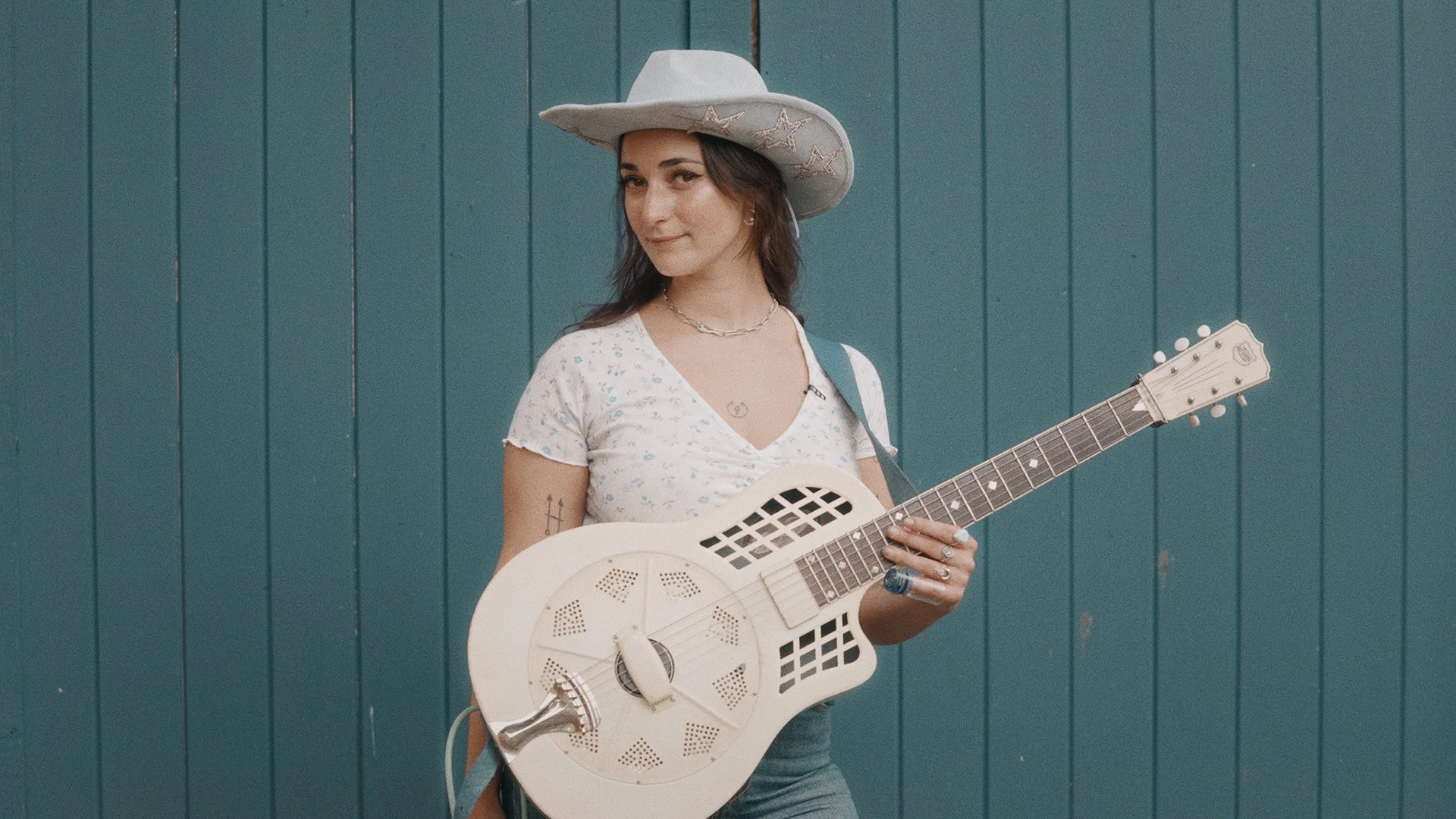
Photo by: Mike Vanata | Western AF
Written by: Meredith Lawrence
Beneath the pitched Gothic revival ceiling of Saint Ann & the Holy Trinity Church (which doubles as an independent arts venue in Brooklyn), singer/songwriter Cristina Vane is trying out an unreleased song; “Just here sitting thinking about quitting / Once I’ve had just one more smoke,” she sings, accompanying herself on slide on her ivory-colored National resonator guitar.
Vane is, as she puts it, “transmuting a feeling,” with her music, and songs come and go from her sets accordingly. And something about the quiet, attentive audience and the space’s grandeur compelled Vane to perform a few songs that don’t often make the list.
“New songs are truly born when I perform them in front of other people for the first time,” she says. “I do actually think of my songs in terms of being born… they're conceived when I write them, but I feel like they're truly born.”
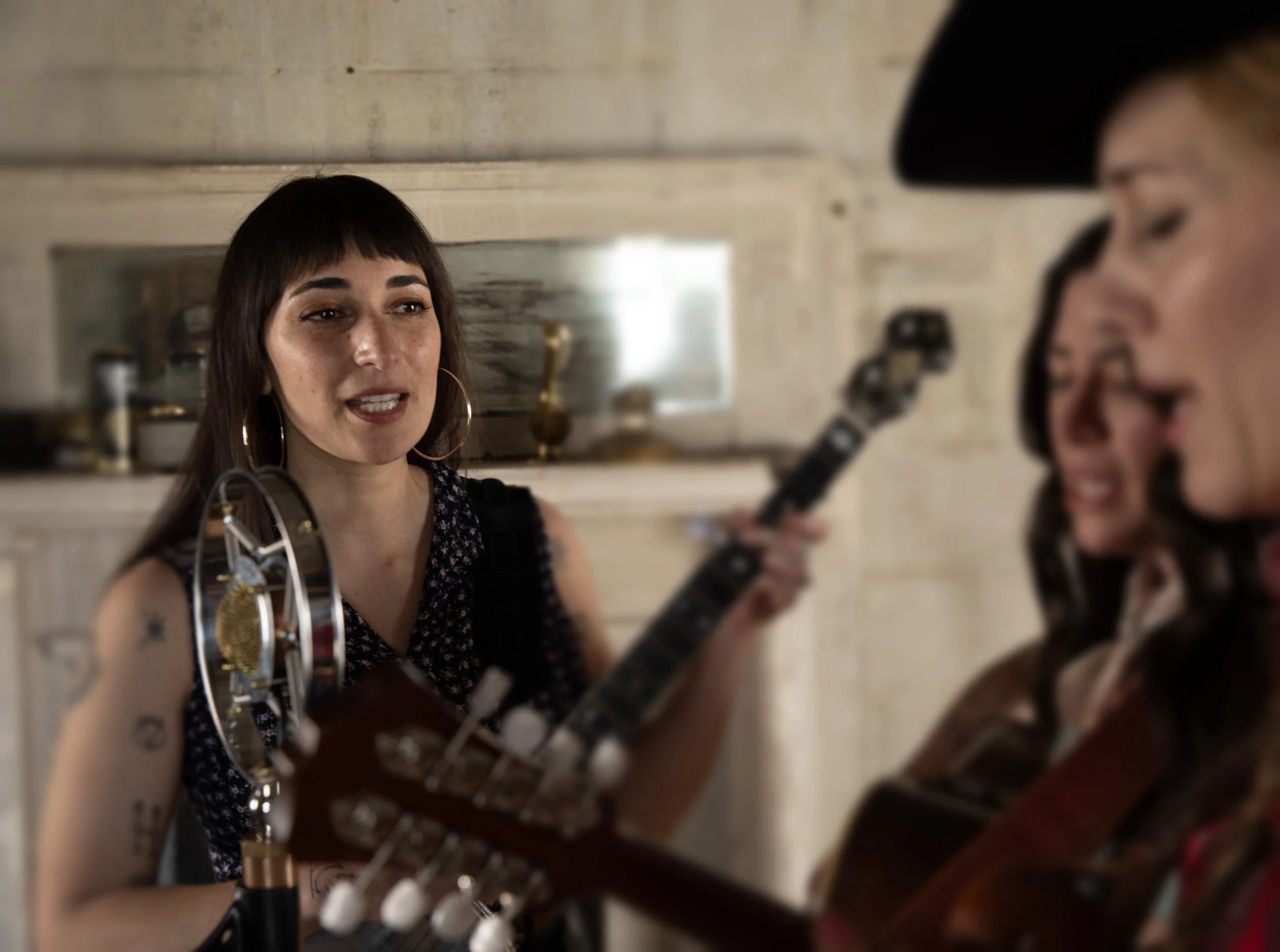
Photo by: Brian Harrington | Western AF
Songs naturally fade from circulation as her repertoire grows, but Vane’s been thinking a lot lately about how the songs resonate with different audiences, and reminding herself the importance of those connections, and the stories she has to tell. It’s a fitting reflection for someone whose latest release, 2025’s Hear My Call, turns Vane’s storytelling on herself, insisting that audiences listen.
Vane was born to an Italian American father and Guatemalan mother, grew up in Italy, England, and France. For years, she felt self-conscious and struggled to rectify that background and upbringing with the music she played, sidelining her own story. She studied blues, country, and American folk traditions and stories — “I'd moved to Nashville to absorb and to pay homage and to put in my work and to show the respect,” she says. Now Vane, who plays slide guitar and banjo on set, merges her background with her musical loves on Hear My Call, a natural inflection point pivoting Vane from a student to a more experienced musician who owns her craft and story.
Growing up, Vane listened to and studied a variety of music. Her father played Led Zepplin, Lynyrd Skynyrd, and Steely Dan around the house, and her mother listened to Depeche Mode, the Rolling Stones, and Laura Pausini. Vane studied classical piano and flute (and even thought she might major in flute at a conservatory). But picking up guitar as a teenager was almost an after thought until, guitar in hand, Vane started putting music to the poems she’d written since she’d been a small child.
“I would just sing myself to sleep as I was taking all my clothes off, which is really hilarious — just strip teasing in my crib.”
“I was always singing. I sang in my crib, apparently. And they would hear me through the baby monitor. They'd go in there and I would just sing myself to sleep as I was taking all my clothes off, which is really hilarious — just strip teasing in my crib,” Vane says. “Anyway, yeah, I always sang.”
Still, in high school Vane thought she’d likely go into international relations or journalism, like all her classmates. Then while studying at Princeton, Vane decided to give music a go (and moved to L.A. to do just that after graduating). Home for the summer in London after her junior year, Vane hit the pavement and started playing her first shows at local pubs. One day in Camden, she stayed late to hear the evening band, Sam Green and the Midnight Heist. The riff Green played on lap slide guitar in the band’s song “Miles Away From Home,” hooked Vane. She went out and bought a slide from Guitar Center, and started discovering the Delta blues — Blind Willie Johnson and Skip James — and fell in love with the sound and the connection she felt to the music.
“I think that is always what really blew me away about this music. I would sit there and be like, ‘man, I have nothing in common with this person singing, like nothing, nothing at all. And still, I feel it in a place in my soul that is so deep,” Vane says.
After a few years in L.A. downtrodden by the braggadocio and unrealistic expectations of a see and be-seen industry town, Vane considered quitting. Instead, after an outpouring of support on social media, she set out on a six-month tour across the U.S. its stops crowdsourced in what she called the ‘Show Me Your Hometown’ Tour. Invigorated, Vane wrote most of her first album (2021’s Nowhere Sounds Lovely) on that trip, and moved to Nashville afterwards, where she’s lived since.
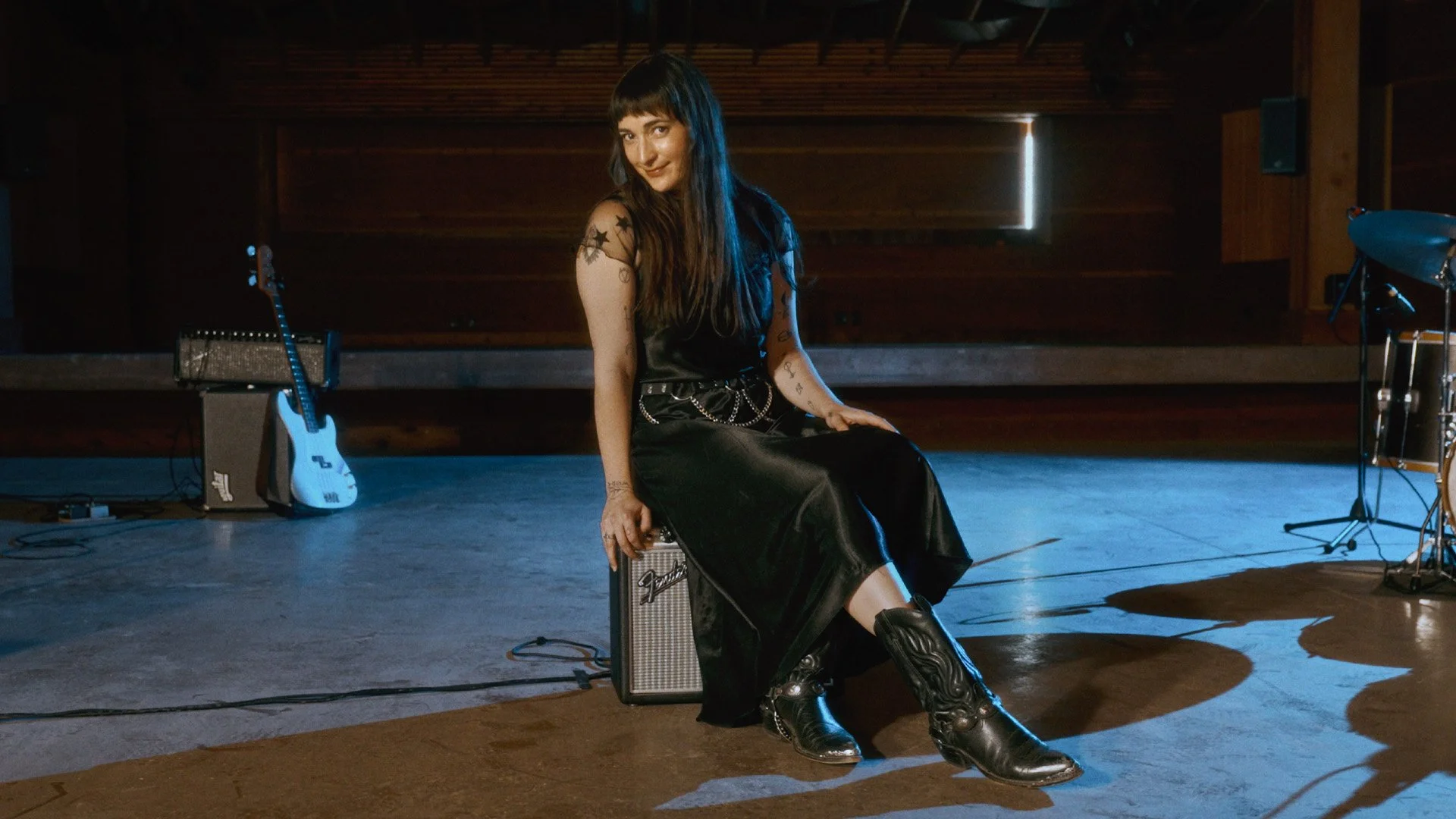
Photo by: Mike Vanata | Western AF
While in music and literature, mountains often signify adversity, something to climb or to conquer, for Vane, mountains represent something far more comforting and awesome. Poking up across Hear My Call like lighthouse beacons, they call her back to her roots again and again (Vane was born in the foothills of the Italian Alps). Mountains offer shelter on “My Mountain,” and help Vane shake off an ex on “Lost You in the Mountain;” more subtly, they’re there in the background of “Little Girl From Nowhere,” Vane’s autobiographical declaration of her worth. So too, it’s from high up in the Rocky Mountains in Estes Park, Colorado from which Vane conceived of “River Roll,” a banjo-driven bluegrass soliloquy on human greed and environmental destruction.
“I actually think about mountains as both refuge an imaginary place of healing and introspection,” Vane says. “When I think of mountains, I think of the West, and that's the closest I feel to God. I'm kind of agnostic, so to me, it doesn't feel like ‘oh a mountain to climb.’ I'm like, ‘those are other worldly, dude, its like alien vibes out here.’ That's how I feel about mountains.”
Nourishing one’s internal life is essential to becoming a full-fledged adult, and likewise artist. Though much of the album is a reflection on where Vane came from, Hear My Call’s title track looks to her future, too: ‘Hear My Call high above the mountaintops / A solitary bird that stops to sing / Someday soon they're gonna call my ship on in / And I'm gonna sail away to sea,” she sings. American traditional music has always been crafted by a smorgasbord of influences and immigrant traditions. Now, Vane is using all of those threads to add her story to the canon.
“It was a sort of a reclamation of my own story, my own influences, the things I find interesting,” Vane says. “I have heard y'all; I say ‘y'all,’ I like it here. But now it's time for you guys to listen to someone else for a change, because there are a lot of people in the world, and there isn't just one way to grow up. There isn't just one way to play music.”
Western AF is not currently accepting feature pitches for Western Dispatch. If you simply can’t help yourself you can send it to westernafsubmissions@gmail.com but, really, we aren’t accepting pitches.