
TIMBO: MORE THAN A HONKY-TONK HERO
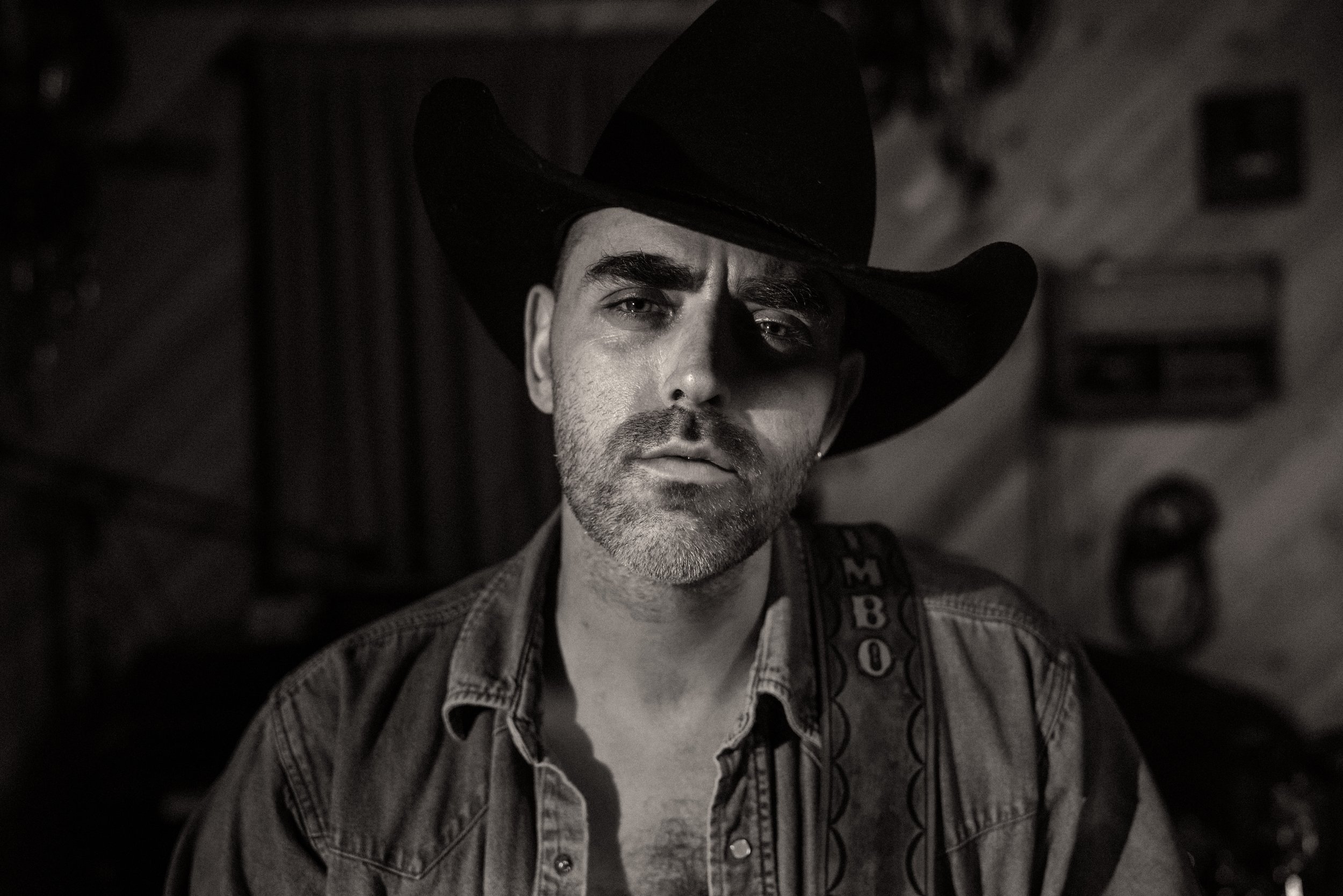
Photo by: Mike Vanata | Western AF
By: Anna LoPinto
I’ve made it to church. A church where the stained glass buzzes neon, the saints on the wall are Merle and Dolly, and the congregation’s “Saturday best” are rigid denim and pearl snaps. It’s a weekend-night revival at Skinny Dennis in East Nashville. A gray-haired pair swing together, bachelorettes are invited one-by-one to two-step, and session players watch the band intently from the edge of a packed dance floor.
That communal spirit owes something to Tim Bolo, affectionately known as Timbo, an institution in Nashville's country music scene. Flanked by a pedal steel player, drummer, and bassist, he elevates each song with his soaring, raspy voice and undeniable honky-tonk swagger. With bright eyes, a raccoon tail hanging on his belt, and a cowboy hat that seems to slide farther back as his set progresses, Timbo’s playful physicality matches his vocal confidence.
Riffing on the Haggard classic, “Okie from Muskogee,” Timbo quips, “I’m proud to be a native of Music City, a place where even squares can have a ball…” He punctuates the verses with his own commentary: “We don’t smoke marijuana in Music City (sometimes we do) / We don’t take no trips on LSD (In East Nashville they do).”
It’s a cheeky synthesis from a born-and-raised Nashville son, whose deep knowledge of his hometown gives his playful jabs credibility. Not one to shy from what is expected, Timbo masterfully bobs and weaves around iconic melodies to make classic country standards uniquely his own. He also bucks the criticism that playing frequently in his hometown might hold him back.
“Broadway is an institution. It's a part of our culture here in Nashville. It’s incredible that we have it. It's a mecca and a great place to cut your teeth. There’s always been a stigma about being a local and playing too many shows in town, versus traveling,” Timbo says. “People worry too much about what other people think. I was born and raised here, why wouldn’t I play here?”
Playing regularly in town let Timbo get “tour tight” without leaving home and gave him the chance to thread his own songs into his sets. In the process, he developed a signature sound built around his emotive, roots voice, strong rhythmic foundation, and unmistakable groove–a blend he calls “country blues” or “soul country.” A sound he developed in part growing up listening to music from the Black and Mexican communities in Nashville.
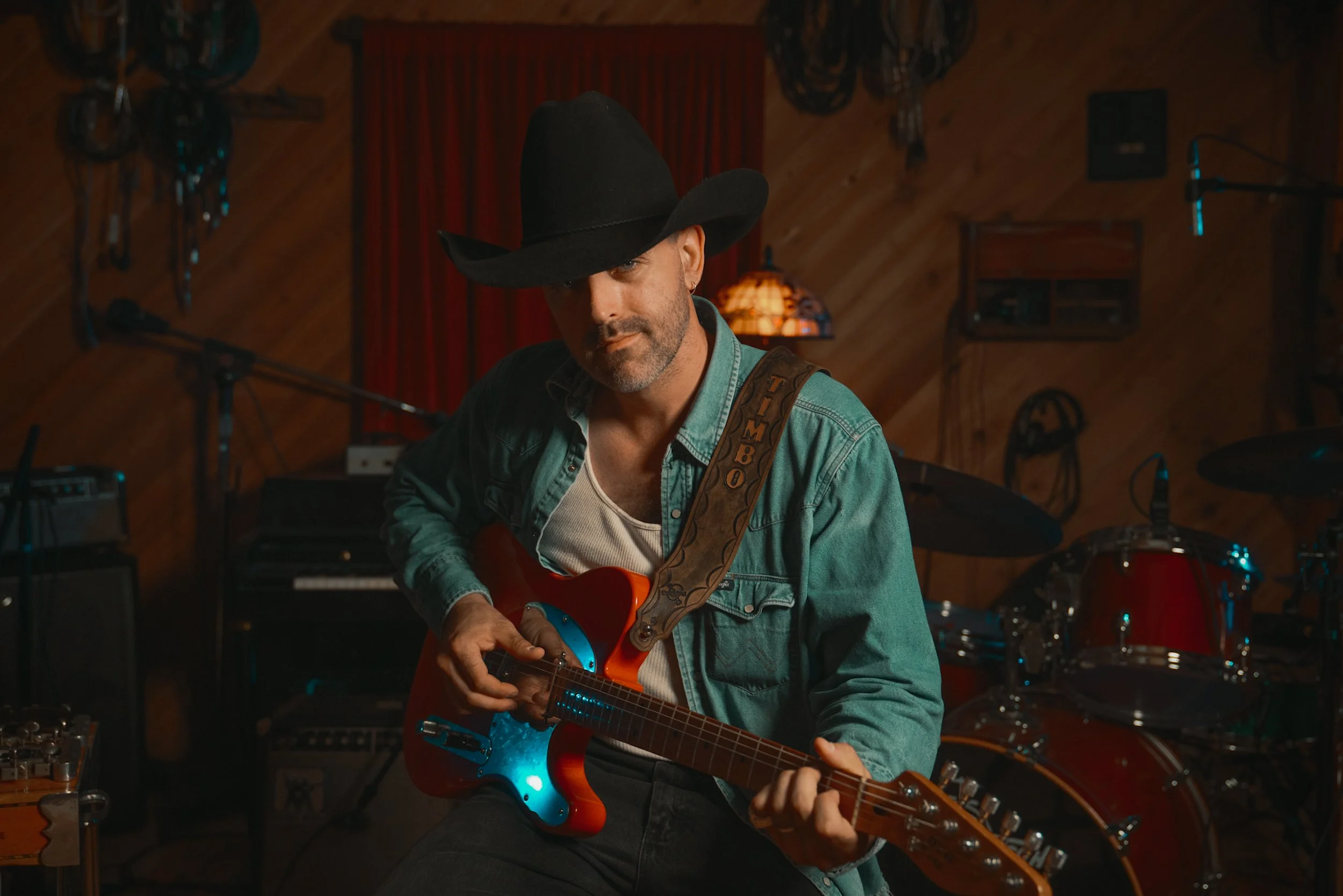
Photo by: Mike Vanata | Western AF
A few days after the Skinny Dennis show, with less Lone Star and more sweet tea, I sit across from Timbo at the famed Center Point BBQ in nearby Hendersonville, Tennessee. Where Skinny Dennis expertly pays homage to old Nashville, Center Point embodies it. The restaurant, established in the 1960s, has walls covered with portraits of its patrons: Johnny Cash, Loretta Lynn, Jerry Reed, George Jones, Elvis Presley, and Willie Nelson gaze down at me. I realize Timbo has unexpectedly taken me on a pilgrimage.
“Every place downtown is trying to be this place,” Timbo says with a smirk. “I’ve been coming here since I was a kid.” Dressed in a Looney Tunes pearl snap, and a trucker hat with his family farm’s logo on it, he sits back with ease. Nearly everyone we encounter at the smokehouse is a friend of Timbo’s. Our server is a high school pal; a busboy is a “cousin” he once snuck into a bar; a customer, James Kee, a music buddy, grabs a to-go order. It’s easy to be comfortable when everywhere is home.
Born downtown at the (now defunct) Baptist Hospital, Timbo describes Nashville in the ‘90s as a “sleepy town” that retained its musical DNA. “It was still Music City. Brooks and Dunn were on the cornflakes box, but it didn’t look the way it does now. Kinda run down and nothing gentrified,” Timbo explains. Music runs along both sides of Timbo’s family tree. His father is an Arkansas-born bluegrass virtuoso; his mother, an Illinois-raised farm girl, is his “favorite singer.” Both were drawn to Nashville’s music scene.
“I’d say as a kid, we were musicians’ children before anything else.,” Timbo says. “We didn’t have daycares and babysitters. We went where Dad was working or where Mama was working. I spent many nights at the Station Inn, sleeping in the booth.”
“We didn’t have daycares and babysitters. We went where Dad was working or where Mama was working. I spent many nights at the Station Inn, sleeping in the booth.”
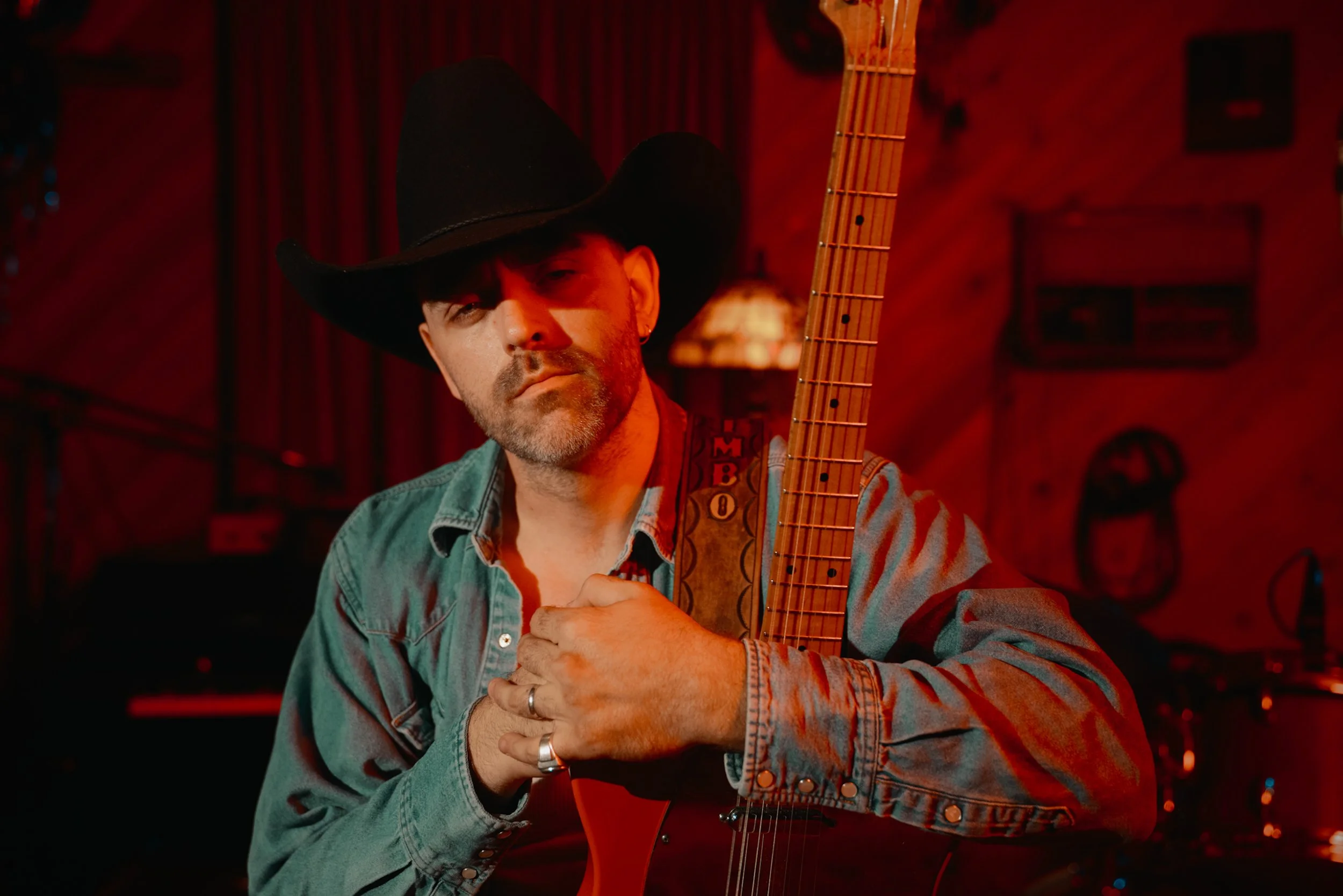
Photo by: Mike Vanata | Western AF
Timbo’s childhood story sounds like a firsthand account of American roots music. Jimmy Martin and Ralph Stanley would go coon hunting with his maternal grandfather. His dad was Bill Monroe’s last fiddle player. When Timbo and his brother went to the Grand Ole Opry to watch their father perform with Monroe, the bluegrass legend would give them a quarter or a signed dollar. The boys promptly spent the money on candy at Cracker Barrel.
“I grew up knowing the Nashville number system. Some kids remember the Barney theme song, but I remember the ‘Gospel Plow’ and ‘Hey Good Lookin’,” Timbo says.
Those connections continued into Timbo’s own career. His first solo gig was at Springwater, the oldest bar in Tennessee. Layla, of the iconic Layla’s Honky Tonk, paid for his first record. He calls renowned bassist Dennis Crouch his “godfather,” and the late steel player Robby Turner, known for his work with Waylon Jennings, was one of his best friends.
Despite the momentum, Timbo’s path into music was far from straightforward. As our food arrives–chicken tenders for him, a pulled pork plate with slaw and baked beans for me–Timbo raises his hand, “Before we start, let’s bless this food.” After his brief but earnest prayer, we resumed our conversation.
“I always say I’ve been blessed, blessed to still be alive, I feel that way every time I wake up in the morning,” he says. A self-described “troublemaker,” Timbo was on probation from age 15 to 24. “Growing up, Nashville was rough in some parts. As musicians’ kids, we probably didn’t have as much supervision. I was selling a lot of pot, drugs, anything I could get my hands on. I’d sell weed to my high school bus driver.”
Though he picked up musical skills through osmosis (“there were instruments everywhere in my childhood home”, he says) Timbo didn’t seriously pursue music until his mid-20s. After selling drugs, losing friends to addiction, and a turbulent divorce at age 24, music became his focus. “I never ever pursued it until God made me. He just brought it to my attention that this is what I am.”
With music as his refuge, and Crouch, Turner, and guitarist Mark Thornton (known for his work with Jerry Reed) as his guides, Timbo started fervently playing and built a following at Nashville establishments rooted in traditional country music, including Robert’s Western World, The Nashville Palace, and American Legion Post 82. He earned a reputation as a contemporary honky-tonk hero. Along the way, he befriended then up-and-coming artists like Sierra Ferrell and became a fixture in East Nashville's burgeoning Americana scene of the late 2010s and early 2020s.
Originals like “Night Owl,” “The Saddle Song,” and “How Much Did It Cost,” showcase Timbo’s gift for blending country, western, blues, and bluegrass. His command of honky-tonk standards makes him an exceptional live performer, while his own songs reveal the breadth of his musical sensibilities. His work has drawn the attention of Zach Top, Marcus King, Leon Bridges, Nikki Lane, and longtime friend Sierra Ferrell, whom he opened for at the Ryman Auditorium in 2024.
As we finish up our food, another server and friend, Jordan, clears our plates. Timbo warmly introduces us, mentioning our accomplishments and how long he’s known each of us. It’s a small gesture, but in Timbo’s company, it’s easy to feel you belong.
He moves just as comfortably among Nashville’s old guard and its rising artists. Timbo bridges the gap between the best of what Music City has always been and the best that it can be in the future. He’s an artist who plays the Grand Ole Opry and then loads in at an East Nashville dive to show off his deep country music roots.
“I don’t know if I want to be a hometown hero, but I can’t help that I love my city. This is where I come from. I come from these roots. I come from this heritage. I come from this culture. I'll pay my dues as long as I need to until God has the next step for me.”
He pauses, then adds with a sly smile, “And you know what mama says: the tortoise always wins the race.”
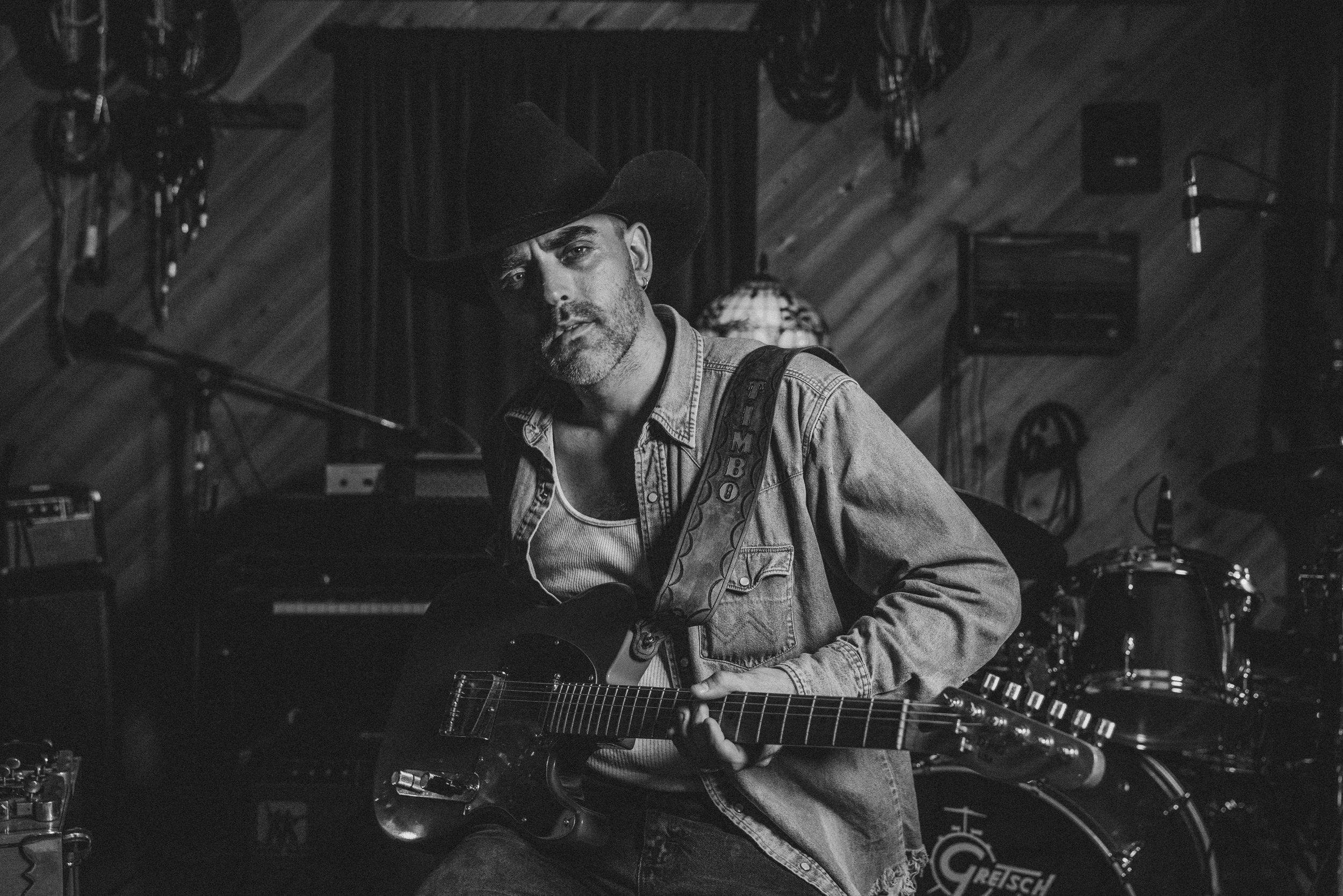
Photo by: Mike Vanata | Western AF

Western AF is not currently accepting feature pitches for Western Dispatch. If you simply can’t help yourself you can send it to westernafsubmissions@gmail.com but, really, we aren’t accepting pitches.