
Rejecting Fear: Benjamin Tod Marches Forward In a World Gone Mad
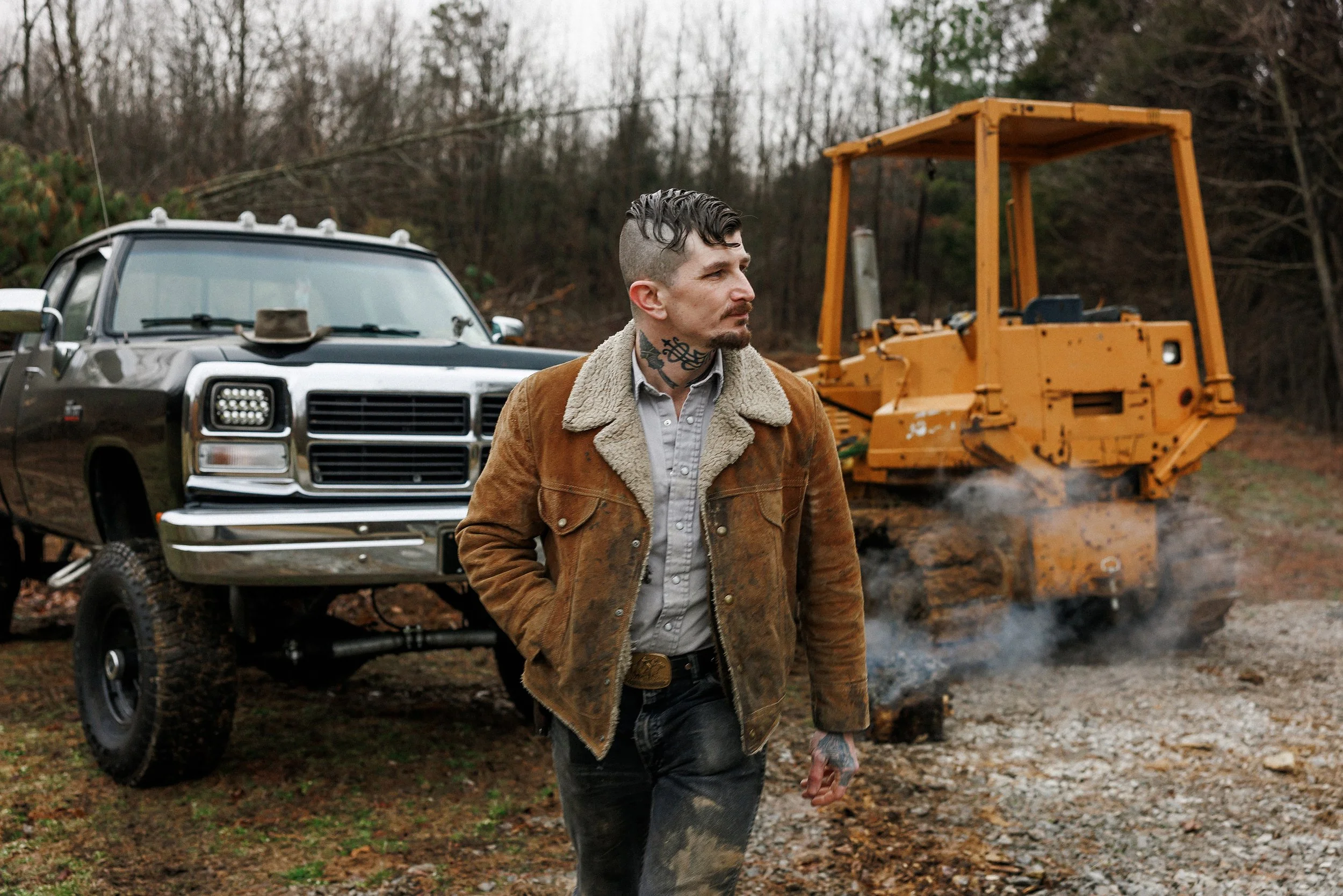
Photo by: Starla Graves
By Garret K. Woodward
Over the course of my 20 years as a music journalist, I’ve placed certain moments carefully onto the shelves of my memory. Interactions that are not only sincere, but also throw a few more logs onto the fire to keep this whirlwind career going. One of those occurred two years ago while driving cross-country from an assignment in Montana back home to Western North Carolina. During that trek, I received a text message from singer-songwriter Benjamin Tod.
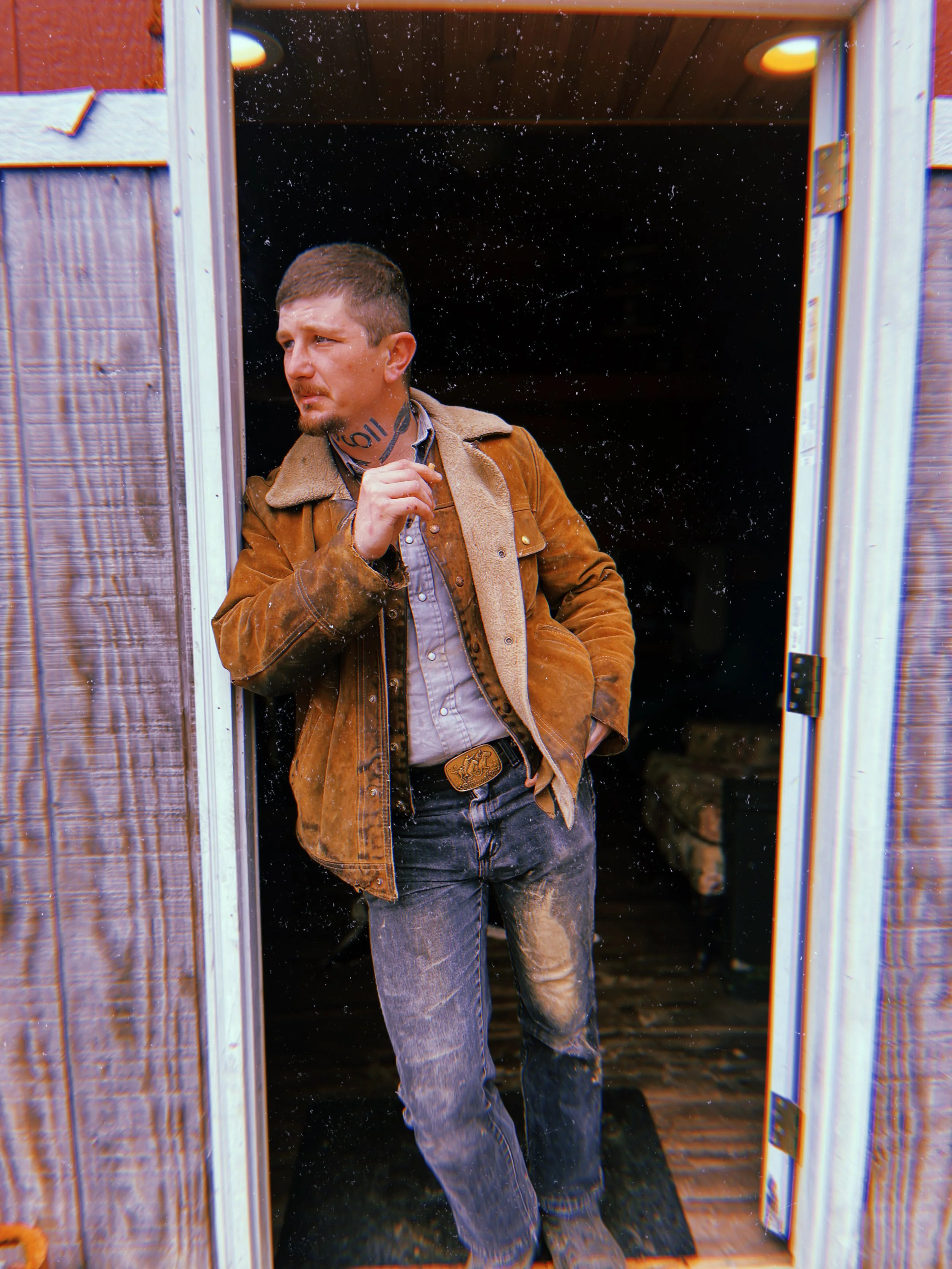
Photo by: Mike Vanata | Western AF
He was wondering if I wanted to collaborate on a new biography for his latest album. He also didn’t want to do a phone interview, where a face-to-face interaction would better tell his story, both personally and professionally, at that juncture of his life and career. Knowing Tod lives in rural Kentucky, I told him I could swing by his house enroute to Carolina and conduct the interview. He replied that he wasn’t there, rather he was driving with his wife, Ashley Mae, to visit her family in Rapid City, South Dakota.
“Well, I’m actually stopping in Rapid City tomorrow,” I texted back. He immediately replied, “So are we.” That serendipitous breakfast rendezvous would take place the next morning at Tally’s Silver Spoon on 6th Street. On the sidewalk in front of the restaurant, I met Tod, sporting his signature cowboy boots, dark jeans, and a short-sleeved button-up shirt (tucked in) with a large knife attached to his belt. We went inside and sat down, grabbing the table next to the front door, Tod’s back purposely to the wall, as if to always keep a watchful eye as to who might walk in, friend or foe alike.
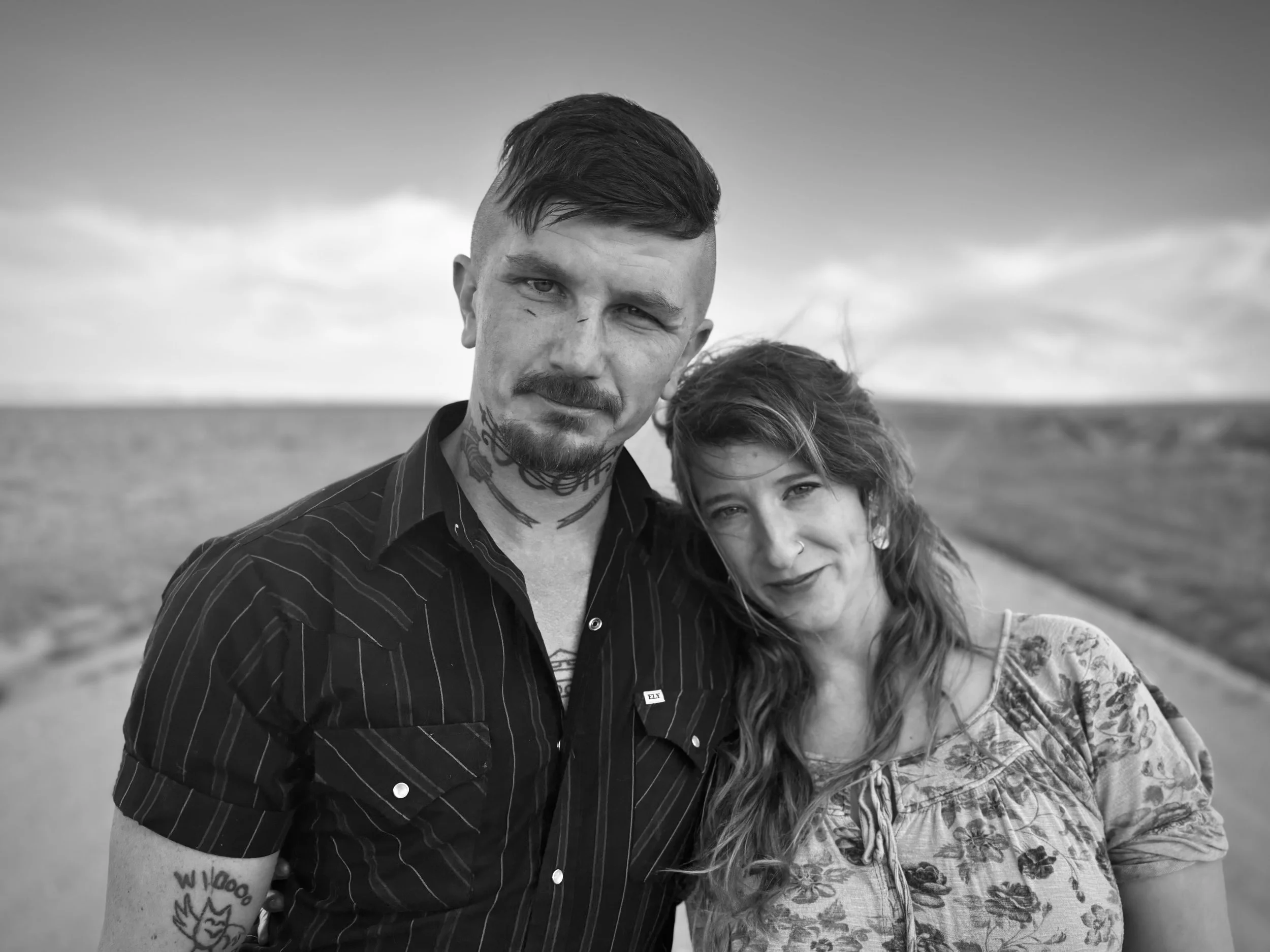
Photo by: Mike Vanata | Western AF
To know and appreciate Tod’s music is to dive deep and understand the gamut of the human condition, for good or ill (these days it’s mostly good with Tod’s hard-fought sobriety and recent fatherhood). To get to know Tod as a flesh and blood human being sitting in front of you — looking directly into your eyes and hiding nothing over coffee, eggs and conversation — is to understand just how rough and tumble his road has been; and just how genuine and heartfelt his songs are. The “real McCoy,” as they say.
Rapid City wasn’t the first time I had interviewed Tod. We’d crossed paths numerous times over the years, which is why he felt comfortable asking me to do the bio. And what I’ve learned in my time with him is that he lives by three very present and very tightly-held principles: loyalty, honor, and authenticity. Leave the bullshit at the door; work hard; and be proud of your continued journey — in his case, a perpetual evolution of self and intrinsic salvation.
I wouldn’t cross paths again with Tod until this past July, backstage at the Under the Big Sky festival in Montana. Standing underneath a thick pine tree grove, we reconnected and made plans to interview right after his set. Later that evening on the Big Mountain Stage, with the fading sunshine on his back and beads of sweat dripping down his face, Tod became a beacon of hope and solace with his hardscrabble lyrics and soaring tone.
“And the sun’s probably shinin’ in Wyoming / And the moon she’s casting diamonds on a low-lyin’ stream,” his voice rang out during “Wyoming,” a melody that’s become a soul-stirring anthem for Tod and his die-hard fans. “And when my soul is finally set free /You can burn my body in a prairie breeze.”
Anchored on the railroad tracks running alongside the festival property was a seemingly endless BNSF freight train. It’s an image Tod knows well from years of train-hopping and seeking his spiritual path, which included stops in Whitefish. Finishing up the set, Tod put his guitar down and wandered over to the field behind the stage. He quietly watched the train as it revved its engine and pulled away, soon shifting his gaze to a rainbow that appeared overhead.
“When you see those trains, what do you think?” I stood next to Tod and asked.
“Well, I can diagram each train that goes by. I’ve been waiting for this [train] to air up all day,” Tod smiled with a mischievous grin, the kind of glance that provokes the urge to leave it all behind and hop the locomotive to destinations unknown.
At 35, Tod’s train-hopping days are mostly behind him. His main focus now is being a great father and respectable husband, and an upstanding member of society. He’s also involved in the Muhlenberg Music Mission, a nonprofit he helped cofound in Muhlenberg County, Kentucky (where Tod resides). MMM offers free instruments and lessons to local youth, as well as helping out whenever it can for a variety of causes around the region.
All of these things are part of Tod’s ongoing story. Add in exhaustive touring schedules and, as of this year, reviving his group, the storied Lost Dog Street Band, which he started with Mae, after a short hiatus. In 2027, Tod’s debut album Human Divine: A Love Story will celebrate its 20th anniversary. I asked Tod what he sees when he looks into the rearview mirror and makes sense of the last two decades. He shakes his head, in awe of time and place itself.
“I would say that rejecting fear in your life is extremely important. Rejecting fear over your own abilities. Rejecting fear over what you can accomplish in this world, and what you can offer this world” Tod says. “I would say love is the most important, quintessential water of life. People use fear for extremely evil means now. Fear’s the only thing that holds us back from everything that we need to become, inspired to become in this world.”
“Fear’s the only thing that holds us back from everything that we need to become, inspired to become in this world.”
In recent years, Tod has released two solo albums, Shooting Star (2024) and Vengeance and Grace (2026), the former being a record of pure classic country gold (à la Hank Williams and Waylon Jennings), which firmly planted Tod’s flagpole of rebellion and truth. It was, and remains, this pushback against the “bro country” movement that started in Music City. It was also a love letter of sorts to Nashville, or at least what the town used to be — a long-gone image of Lower Broadway before it became a corporate zoo of bright lights and loud noises, a time when Tod was a young busker roaming the streets.
“As far as being a songwriter, I’m more humbled than I have been in many years,” Tod says. “I am thankful for where I am at, anywhere that I am at in this industry. I’m thankful for any amount of appreciation or gratitude that the fans give me.”
In becoming a father, Tod can’t help but possess a different mindset these days. His perspective is simply one of taking care of his young family and dear friends. And pushing ahead by the honest ways and means that keep the ship steady and in motion, no matter how choppy the waters may be on a planet of corporate takeovers and diluted culture incessantly spoon-fed to our society.
“In years past, I had a much cockier attitude and much more opinions about myself and the world, and how they relate with one another,” Tod says of his new-found perspective (which he credits partially to fatherhood). “I’m not going to argue with people about semantics, about songwriting. I know what I know, and the people that have experienced what I experienced — and especially the people that lived through the analog world — who remember what this civilization used to look like before these [corporate] thieves stole it.”
For Tod, everything swirling around him plays into the grand scheme of things in life, where it’s about love and compassion in an often cruel world, about resiliency and survival when it seems like everything is stacked against you.
“It’s when you start getting the fear that you have to remember to tell yourself, ‘You’re a survivor. It doesn’t matter what happens with the economy. It doesn’t matter what happens with this world. I am going to march my way through it.’”

Western AF is not currently accepting feature pitches for Western Dispatch. If you simply can’t help yourself you can send it to westernafsubmissions@gmail.com but, really, we aren’t accepting pitches.