
LOU HAZEL: Making it, Or Something Like It
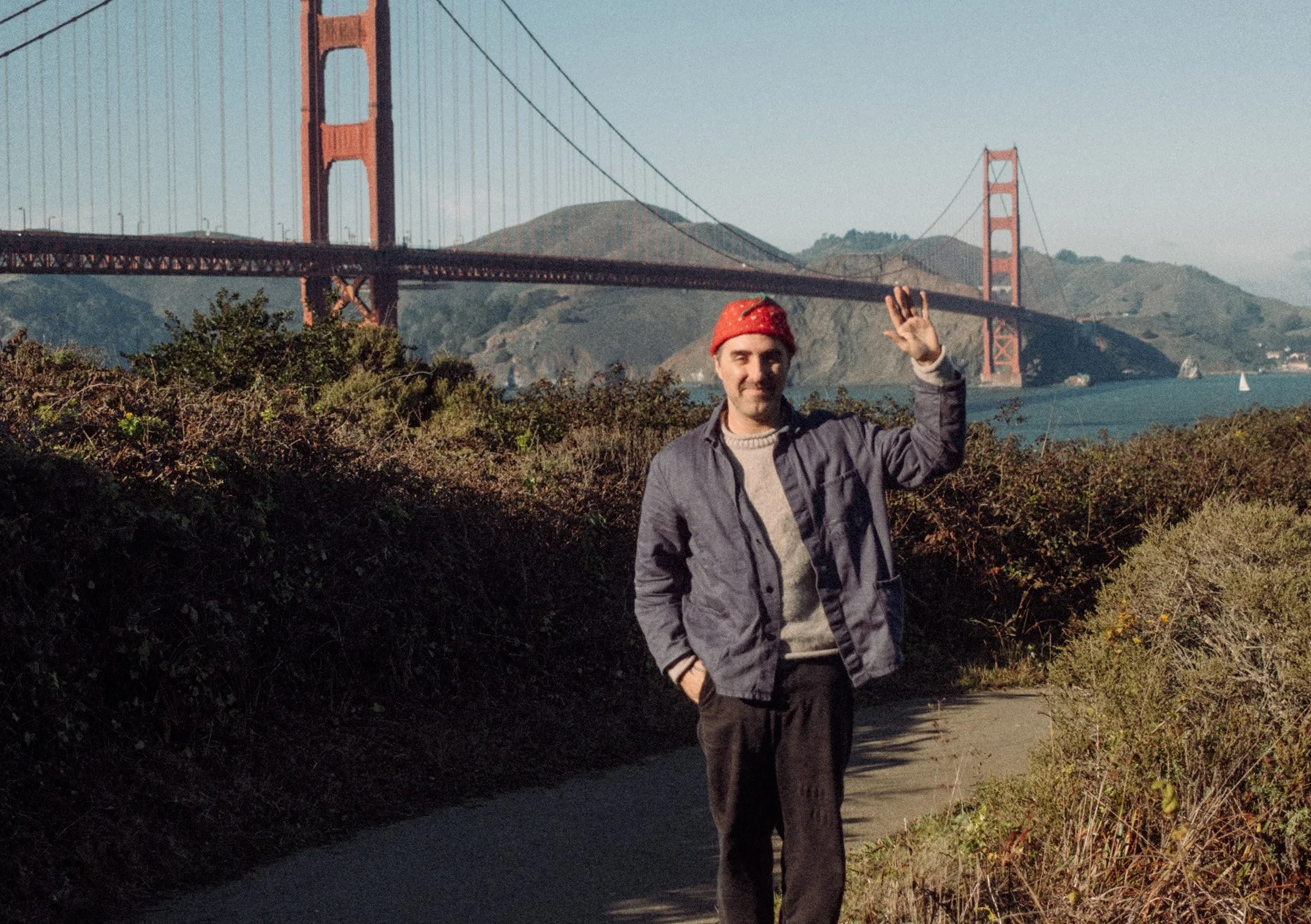
Photo by: Alexa Rose
By: Lou Hazel
If you're going to make a living as an artist, and your parents don't own the island of Bermuda, you're going to suffer for it. It's for the better.
When I was 16, I worked at Dewey White’s General Store (a podunk beer store and recycling center that also sold deep fried chicken tender sandwiches) as a "can boy." A can boy's job is to sort cans all day and entertain the local drunkards. My favorite was "John Boy," a Vietnam vet who drove his golf cart to Dewey's from his trailer. He'd pick up a 12-pack of Milwaukee's Best Ice, then stumble back for another five hours later. Sometimes, he'd pass out in the field behind us, and we'd wake him up by poking him with sticks.
The basement of Dewey's was full of expired beer, which we drank all day. At closing time, we'd help ourselves to whatever cases were left. What we didn't drink I'd take to school and sell out of the trunk of my 1996 Toyota Camry, in the church parking lot across the street.
In the winters, I also worked at the ice rink, following close behind the Zamboni, shoveling the excess ice and whistling at kids going the wrong way. The year I needed shoulder surgery from a hockey injury, my only job option was Pizza Hut where, riddled with acne from all the grease, I made my own custom stuffed-crust pizzas (banana peppers, sausage, the works). One night, I smoked a joint with a woman named Cheyane, who was always drinking Red Bull and popping pills. I left her to close up alone, and that night the Pizza Hut burned down. Regardless of what happened, I was pretty excited I didn't have to work there anymore.
“I was born an artist and have been making art since I was a kid. The Allegany mountains where I grew up are full of rust, drunkards, bars, and straight-up poverty. There’s nobody holding up any sort of sign toward a path as an artist, and I figured the only way to make a living at it was to be a graphic designer or a photographer. ”
I was born an artist and have been making art since I was a kid. The Allegany mountains where I grew up are full of rust, drunkards, bars, and straight-up poverty. There's nobody holding up any sort of sign toward a path as an artist, and I figured the only way to make a living at it was to be a graphic designer or a photographer.
My Associate’s Degree in design and photography from Monroe Community College in Rochester, NY took me three years instead of two, because I was always drunk and working as a fry cook at America’s first Applebee's. I bought my first half-pound of brick weed from the Applebee’s dishwasher and planned to sell it on campus. I was a terrible drug dealer. My coworkers brought their guns to work, smoked blunts on the line, and even lit off fireworks in the freezer. I quit in a fit of rage after my manager Tony screamed at me for not getting a salad out in time. The evening I quit, I won a darts tournament at a nearby bar, but lost the $500 prize when they threw me out for being underage.
Worried about my path in life, my uncle helped me get an internship at an ad agency where he was a creative director, which paid me $7.25 an hour. And an uncle’s friend gave me a job as a "carpenter's apprentice,” but I got fired pretty quickly for cutting too many boards the wrong size. I lived in the nearby town of Pittsfield, MA above a Chinese food restaurant, in an apartment with a giant swastika carved into the hardwood floor, which someone had tried to cross out. And the antidepressants I tried made me feel manic. One night, a friend and I blew up a cement planter in an empty parking lot with a half-stick of homemade dynamite for which we’d traded a cooler of blue fish to two Russians we met in a bar. I was definitely not ‘making it.’
When I was 22, I quit my design job and told my uncle I wanted to be a musician. I also wanted to travel the country living out of my car with the girl I’d fallen in love with. When that fell apart, I moved back home where my working-class family thought I’d just blown my big shot at a white collar job. Instead, I lived in a haunted schoolhouse a friend's dad rented for dirt cheap and worked at a local vegetable farm, digging tomato holes in fields and what not.
The next spring, a friend and I packed our bags for Carolina Beach, North Carolina, where a guy we knew told us we could crash with him. In North Carolina, I met a guy at a bar who told me he’d pay me $20 to help him bleach house roofs, but I couldn’t stand the smell; I applied feverishly for jobs until miraculously, I got hired as a junior designer at an advertising agency. My portfolio from the internship impressed them. But I felt like I had committed fraud. Still, I couldn't believe I was making $40,000 a year. But my anxiety and drinking picked up and I'd show up to work hungover, heart palpitating, dripping in sweat. I lasted one year before I was fired.
At the time, I was living with a musician who played bar gigs full time in Wilmington at restaurants, breweries, beach bars, seven days a week, making decent money. I borrowed a PA system and started gigging in the bar scene myself, playing a lot of original music alongside Townes Van Zandt, John Prine, and Blaze Foley covers. We’d get $150 for a 3 hour set, sometimes a 10p.m. to 1a.m. slot. I thought it was cool I could pay my rent playing music, but it was grueling. My friend Andrew would take me deep sea fishing. I tried to hide fear, but on stormy days the high surf scared the shit out of me; still I learned to to trust the ocean and the boat as we steered through big crashing waves.
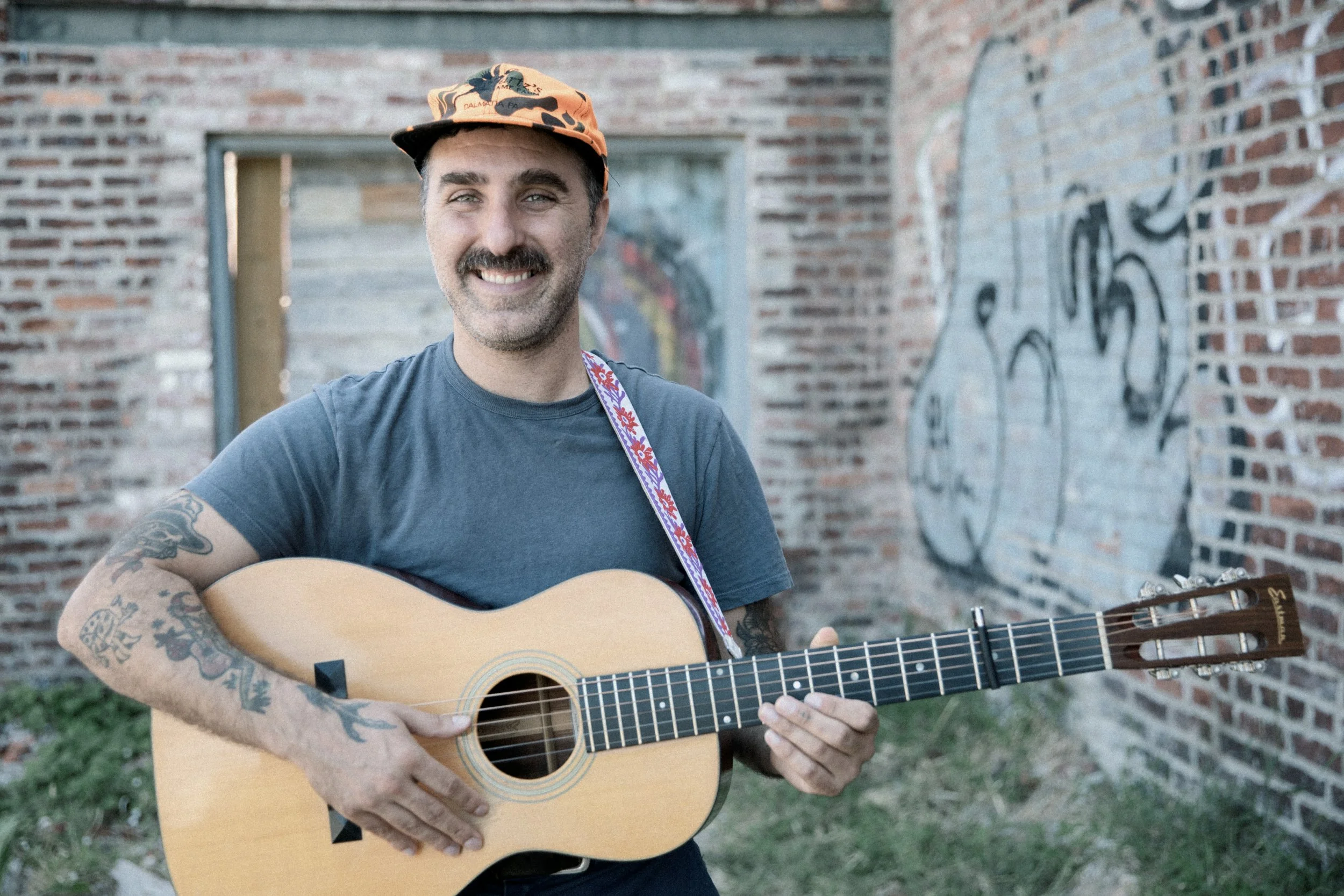
Photo by: Brian Harrington | Western AF
I recorded my first full-length band record, Fences in Wilmington, NC. Some folks in the Triangle found it and started inviting me up to play shows in Chapel Hill, and I slowly started to understand what a music scene was – what it felt like to play a show where people actually listened. I emailed some of my favorite songwriters at the time, Jeffrey Martin and Anna Tivel and opened a few shows for them.
I passed a few months working in a snowboard shop in Lake Tahoe, before moving east again, working odd jobs and dreaming of how to book more gigs. I built a frame to hold a bed in the back of my truck and booked my own tour across the country and back – 10 shows. The last show was opening for Anna at Mississippi Studios in Portland. The show sold out and it felt like the best night of my life.
After that, I recorded my second album, Carolina, Out of My Mind. But my mental health was failing. I was having panic attacks in my sleep every night, and trying to work as a delivery driver during the day. I moved home, often refusing medical help. I couldn't leave the house without a panic attack. My mom would take me to the grocery store and wait in the parking lot to see if I could make it through the checkout. But eventually, I started therapy and began the long, strange journey of figuring out which antidepressants work for me. My nervous system was so sensitive when I moved back to North Carolina that I couldn't even think about a sip of alcohol. I've been sober ever since.
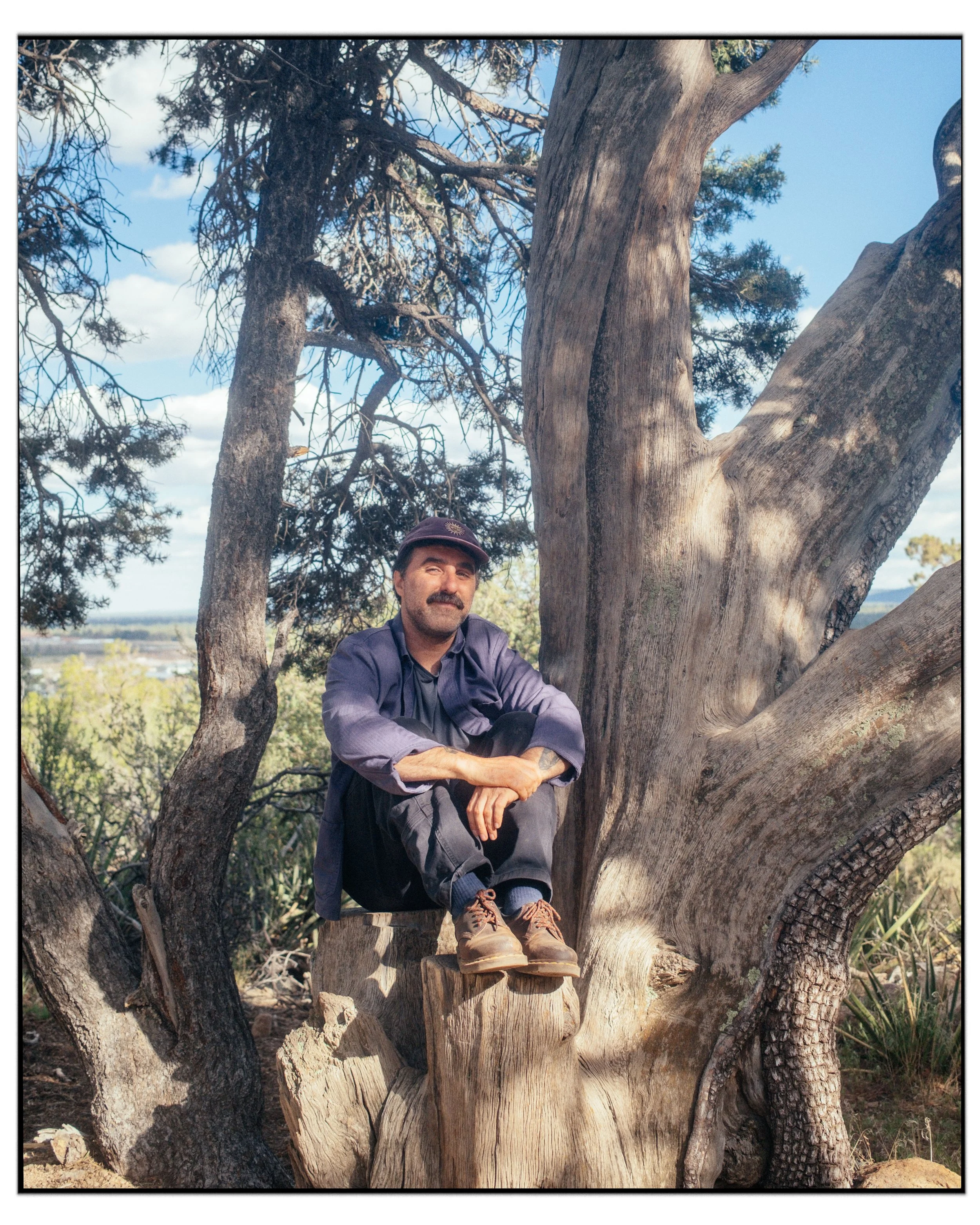
Courtesy Photo
The first couple of years back in Durham, I did a lot of freelance work and photography for other bands like Watchhouse, Mipso, The Mountain Goats, Hiss Golden Messenger, and Deer Tick. I also developed an abstract mural style that kept me busy for a whole year, and at one point painted four floors in one building, a gig which paid me $10,000. In 2020, I recorded my debut full band record (Carolina) and came up with the name "Lou Hazel," after a dog named Emmylou with hazel eyes who used to visit me at my tiny house. My world was expanding again. In 2021 and most of 2022, I started touring with Hiss Golden Messenger as a guitar tech.
Loading in and out of every venue in America something clicked: this is how it actually works. Nobody hands you a map, you just watch enough people do it until you understand the shape of it yourself. I sent my unreleased record Riot of the Red to Mike Taylor (Hiss’s lead singer) while he was on a solo run. He called me and said something like, ‘Why the hell are you a guitar tech for me? This record fucking rules.’
I've toured my own music full time for about three years now. I've relied on a lot of support tours to pay my rent, and I've had the chance to open for some of my favorite bands and songwriters. In 2025, I toured Sweden – my first time singing in another country. On my first headlining tour on the West Coast, I couldn't believe that 150 people could be in a room singing my own songs back to me, and I was making more money than I ever did supporting other bands.
I love the slow, winding road of music and art, and all the people who shaped me along the way. I've learned self-confidence and an unwavering dedication to my art from people who were kind enough to show it to me. I'm currently mixing a new record. I'm 36 now. It's been a meandering path, and I wish I could go back 10 years with the same gentle confidence I'm only just finding. But I finally feel like I have the support, and the people, to make good records. I've lived in Durham for almost seven years now, longer than I've lived anywhere as an adult, and I think that's the real reason the work is getting better.
To the young songwriter, the one still going: look at me. I still don't know what I'm doing. I haven't necessarily "made it" to wherever I thought I was going. But we keep on shoveling ice, sorting cans, customizing pizzas, running out of money, and crashing against waves until we wash up somewhere beautiful. Find your community, and show up the best you can. Maybe you need to drive a while in different directions to find your way, but the real work starts when you can finally sit still.

Western AF is not currently accepting feature pitches for Western Dispatch. If you simply can’t help yourself you can send it to westernafsubmissions@gmail.com but, really, we aren’t accepting pitches.