
ALL JOIN HANDS, CIRCLE TO THE LEFT
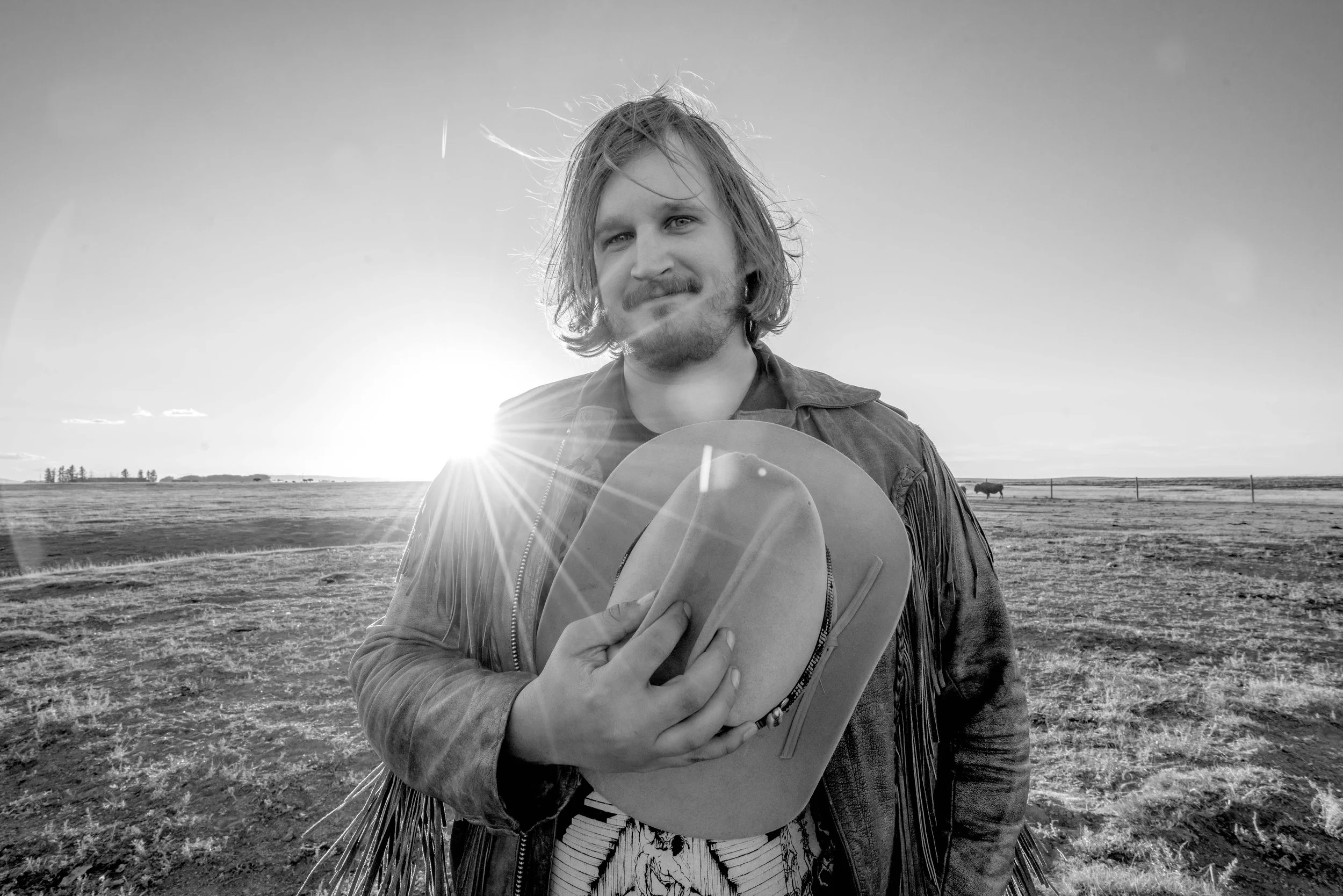
Photo by: Mike Vanata | Western AF
It's always a dude. I'm standing there on the dance floor, saying something silly, instructing a square dance. “Promenade and keep it loose, grandma’s chicken came home to roost,” I holler to the sound of bawling fiddles and blasting guitars.
A young gent stops cold, confused.The rest of the dancers encourage him, jostle him into place. He's made a mistake, but it's alright; no one cares, it’s just fun! It’s his second time making that mistake, though, and he reddens, feeling stupid. His partner says something to him, and he turns and yells at her.
He leaps out of formation, storms off, out the door. His partner stands there, bereft. The dance crumbles around him. Twenty three drunk people scramble to compensate for uneven numbers, one of the few requirements of this dance. It’s still fun, and the music thunders on, but it’ll be awkward now, the symmetry of the dance interrupted like a final verse missing from a song.
“Men are socialized to dislike vulnerability, to think of public humiliation like death. Yes, many men are socialized to endure all forms of physical discomfort, pain, and danger. When met with physical or emotional pain, we are told to stop crying, to bite our tongues until blood comes up.”
I'm behind the microphone, a little frustrated. We’re all going to make silly mistakes, especially when doing something new! This is vulnerable, though. Even with the liquor flowing, even when you’re surrounded by friends.
After the dance, I stumble outside, drenched in sweat, to see if the dude is around. Just to say hello, maybe ask him if he’s alright. I dunno. I spy him, beer in hand, arguing with his girlfriend. She throws up her hands. She leaves. He doesn’t follow. I find other folks to encourage, thank, embrace. I stay the hell out of it.
Men are socialized to dislike vulnerability, to think of public humiliation like death. Yes, many men are socialized to endure all forms of physical discomfort, pain, and danger. When met with pain, we are told to stop crying, to bite our tongues until blood comes up. If you’ve been proud to work your third 14-hour grunt-ass labor shift without complaining, you know this feeling, regardless of gender, which is a social construct. Still, a socially-constructed man, pent up, might arrive at a party where blowing off steam looks like screaming and breaking something. Vulnerability feels like failure, violence feels manly. It’s terrifying and true, that old adage from Margaret Atwood: “men are afraid women will laugh at them, and women are afraid men will kill them.”
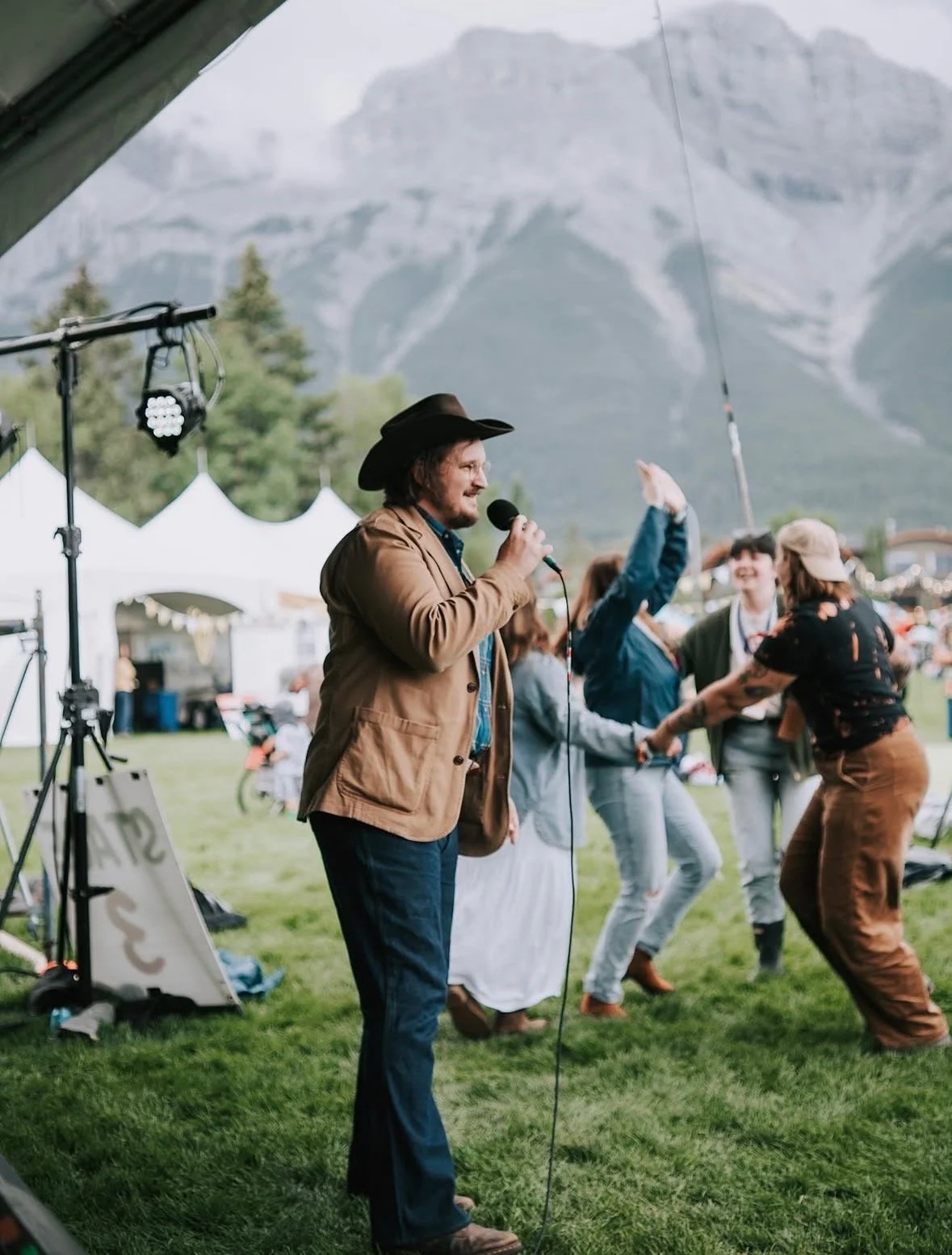
Photo by: Ainsley Christine
Show me a human being who hasn’t felt murderous with rage at some point and I’ll show you a liar. Show me a man who hasn’t been encouraged to be violent, too.
So dancing? Lookin’ just a little silly? Scootin’ a boot? In some cases, forget about it. In some cases, the prospect is too terrifying to bring up. I wanted to ask, “hey man, you ok? Looks like that was hard, just wanted to check on you.” The resultant tears or anger are exhausting for all parties, and I pity us.
I pity us! We never learned to dance or sing. Football, the way I learned to use my body, taught me only violence. I learned to lift heavy, hit hard. Football never taught me to love myself or another, or to listen to my body or another body. I used to believe that if I dared to be vulnerable, I would cease to exist. I would be known as a queer (which I am) and ostracized.
But this can be fixed. I know, because it was with me! I got to go dancing. The first square dance I ever went to wasn’t a date, but I thought it was. It was a kind of queer, almost-date thing. The “are we friends or are we lovers, let’s feel it out” thing. It was 2008, and I was eighteen, and so, so angry. My family had fallen apart, plagued by mental health disasters. I slept with men and women, and was ashamed of all of it. Craigslist hookups and blackout encounters bored holes in my fragile ego. Born to inherit the earth, I had a folder full of sexist memes and photos on my laptop that I added to periodically. My favorite novel was “The Fountainhead” by Ayn Rand. Not only was I queer, I was violent, reaching for something real as if I was reaching towards a stone statue— my genetic makeup, maleness, shame, privilege, all mashed into one terrifying visage of carved rock. I thought everyone not chiseled from this rock was stupid and ugly, even the person who had asked me to the dance. They were not, of course, but the only people I loved or respected were conventionally attractive wealthy people. Exactly what I was not, but felt I should seek out and become.
But the dance was different. Everyone was doing it, not just the cool kids like at a high school dance. Unlike my punk band where we knocked each other down, crowdkilled, and moshed, this dance had rules. They taught the figures to us, and everyone was on equal footing. Young and old were there. Dogs and babies. A potluck in the corner. I got advice from kind old folks several times over. Me and strangers made stars, wove patterns, swirled oceans with our bodies in time with the fiddle. Far from touching stone, I was touching flesh: porous, soft, ragged. Tradition, too, that big and bloody river that got us here. I stepped into the square dance and came out cleaner, kinder: for the first time as an adult, I experienced nonsexual, nonviolent community touching. I took that feeling home, and people started to give me books, talk to me, treat me kindly, see my mistakes and offer redemption instead of judgement.
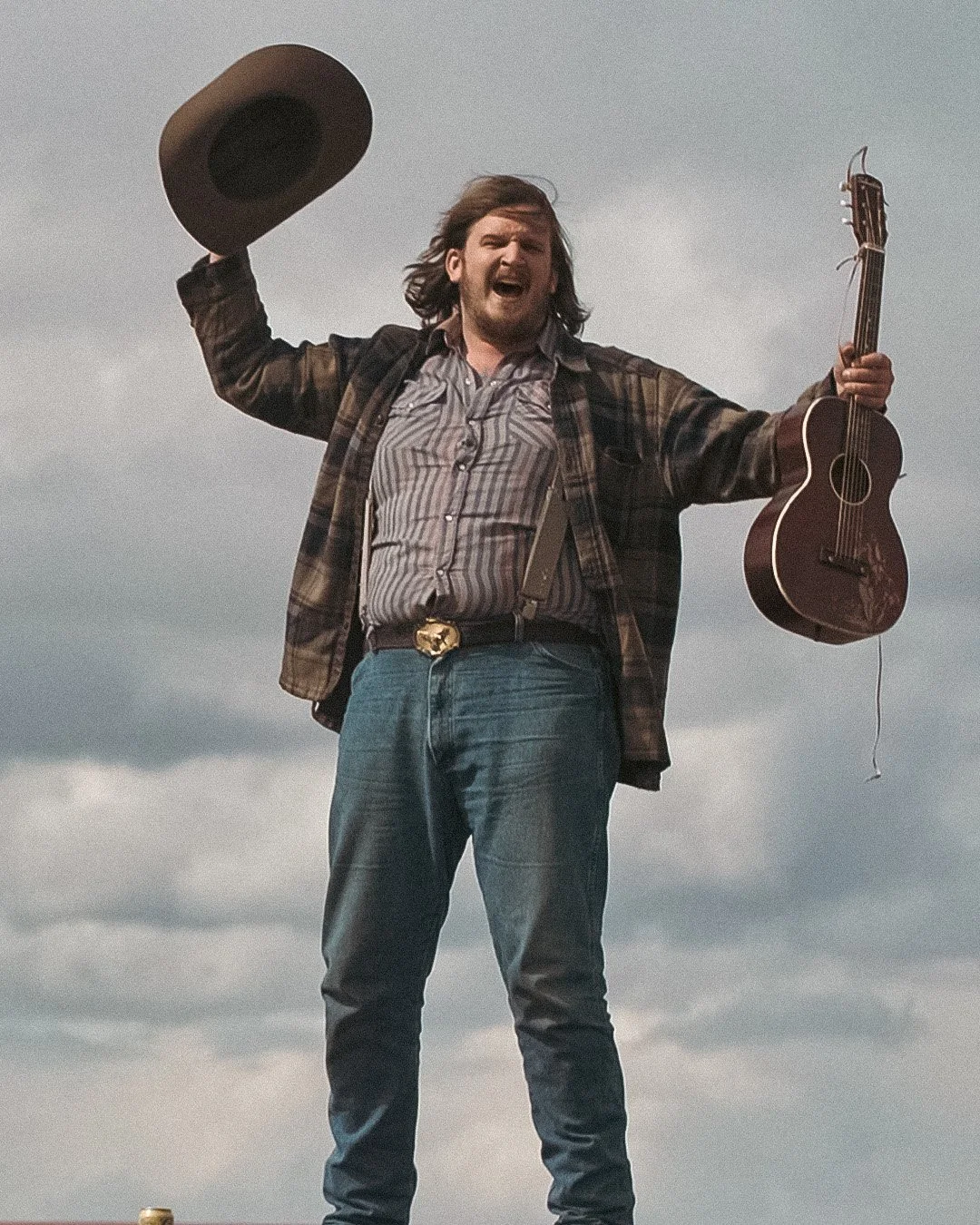
Photo by: Mike Vanata | Western AF
In short, a few of the chains of the ‘ol cis-hetero-partriarchy loosened. Twenty years later, I’ve begun to think of beginner’s square dances as opportunities to invite people to encounter frustration, to experience listening awkwardly, and to trust strangers with touch, weight, and balance. I want people to feel dumb and accept themselves in public and on purpose. Because everyone is doing it, the vibes are immaculate unless overpowering humiliation rears its head, and we avoid that with careful and silly instruction. When it goes well, it’s lovely. It’s cool that it’s familiar and traditional! And when I show a bunch of drunk people basic steps (the same steps I would teach to children), fun happens.
Fun is our birthright! It’s gotta be a little risky to be fun. Folk and country music are fun because they’re balanced on a razor’s edge between tradition and novelty. Old songs are material proof of the pains and sufferings our forebears overcame. Old tunes recall the old countries many Americans immigrated from or the indigenous traditions that couldn’t be stamped out. Our music is a melting pot, and a form that continues to reinvent itself. It’s like surfing big waves with a history book.
All music reinvents itself, of course, to stay relevant. But most folk music has died under the cruel yoke of money or cultural domination. For every one folk song we hear about, a hundred probably die in the dark. But unlike pop, with its continual need for novelty and money, money, money, folk and country music keeps a foot in the 19th century. It tends to be passed down orally. It tends to exist in exchange economies of barter and mutuality. Tunes for friendship, music for joy, music for parties, music on porches and in living rooms, ballads for potlucks.
Hell, in many ways, folk and country are a big tent in terms of class. This remains one of the only kinds of music where being working class isn’t a hindrance. You don’t need to read music, go to college, or be gifted to play this music. You don’t have to have learned from your pappy. Hell, this is a rare music where you can be fat, ugly, and sound terrible, and still be appreciated. Famous even. All you really have to do is listen to a lot of it and play a lot of it.
And, of course, to be vulnerable. To have that ineffable quality that pulls on the heartstrings. To be honest in performance, if a little rough around the edges. To quote my favorite bumper sticker, from the marvelous podcast “Dollar Country”: “I like music that sounds like shit.” I like dancing that looks dumb, and people who are alright with being dumb together. I like bodies of all shapes and sizes. I love all genders and races and traditions, as long as they’re vulnerable, honest, participatory, and rough.
It will probably come as no surprise to anyone that I don’t respect country artists that sing about how they’ll “never change” or how they’re going to “be the problem,” whose embattled, insecure stance mirrors the kind of “me versus the world” position that keeps so many poor folks away from working-class solidarity. I hate it almost as much as the jingoistic, post 9/11 nonsense that the machine crapped out in the early ‘aughts.
But, truth be told, I’m not afraid of that music, because folk and country music is bigger than that bull, and tells true stories just as well as it makes propaganda. As we watch the lonesome cowboy image falter and fall apart, as we learn more of the history of violence our forebears undertook and the complexities Hollywood denies us, something new can emerge. As we watch our contemporaries divorce, scream, delete, cancel, struggle, or build entire careers off of their short-lived petulance, I’m ready for the new thing.
I’m ready for the vulnerability that gets us closer. Especially from men, especially in this music. Especially now. Lots of artists are doing it. To me, the news is good: it involves playfulness, love, and passion.
I think there’s a deep misery in a lot of men. Elders, teachers, and coaches taught me that violence was my birthright and inheritance. I was taught that men had to shape the world with blood and sacrifice by military recruiters, veterans, books, and movies. But I disagreed, I wanted to spend my inheritance elsewhere.
So first, I got angry at the world. All the punk aggression! But my energy? Misspent! While I was out to crowdkill the world in shitty punk bands, people were building loving community all around me, and this, really, is what led me to folk music. To this day, every strident thing I do for my own advancement or against a jerk makes me less happy and connected to people and places. Everything I do out of passion and respect for people deepens my self-regard and happiness.
We can learn to care for our pissed-offness and humiliation without spoiling the dance. When I was a teenage, small-town queer, I needed aggression to stay safe. When I was living in my car, I needed aggression to survive. I still need it. But! We can take that effortfulness, that striving, and use it for one another. We can dance with it, sing with it, be silly with it. The labor, hunger, and dog-eat-dog epigenetic hurts of our ancestors? We can use this pain to make a weird playground out of our lives. We can build something for everyone and tear down the overstuffed, gilded tombs of those who pillaged and hoarded.
If this troubled music has taught me anything, it’s that we define what we inherit. We set its value. I’m new to this, too, but my proposition, gents, is that we can laugh at ourselves, practice communality, and choose happiness together. I start every square dance with the instruction: “All join hands, circle to the left.”

Western AF is not currently accepting feature pitches for Western Dispatch. If you simply can’t help yourself you can send it to westernafsubmissions@gmail.com but, really, we aren’t accepting pitches.